Overview
Kaunos lies on the border between ancient Caria and Lycia, a position that gave the city a distinctive mixed cultural identity reflected in its art, architecture, and burial practices. The city was founded around the 9th century BCE and grew into an important harbor town controlling trade between the Aegean coast and the interior.
The most famous feature of Kaunos is the row of Lycian-style rock-cut temple tombs carved into the sheer cliff face overlooking the Dalyan River. These tombs, dating from the 4th century BCE, feature Ionic column facades and are visible from great distances — an enduring symbol of the ancient city's grandeur. Though the tomb style is Lycian, they were carved in Carian territory, reflecting the cultural hybridization that defined this borderland.
"Kaunos is a city of Caria, not far from the sea, with a harbor that can be closed."
— Strabo, Geography (c. 7 BCE - 23 CE)
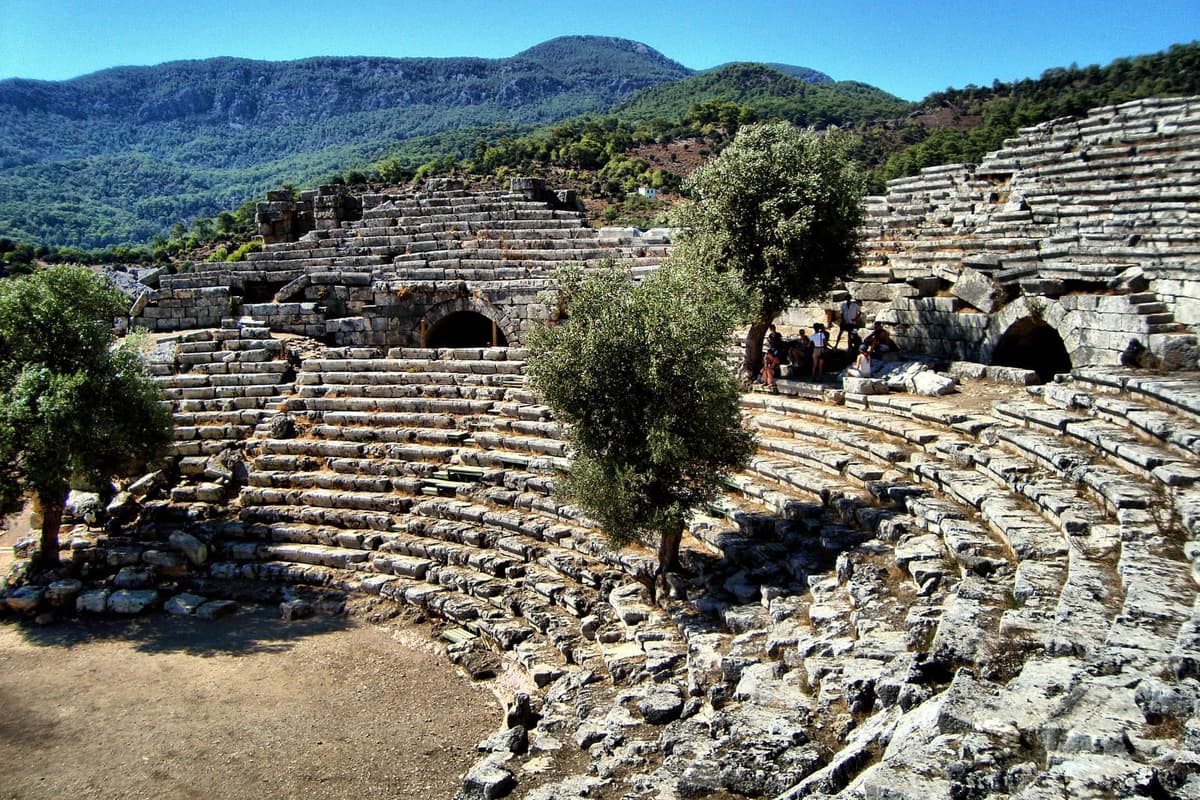
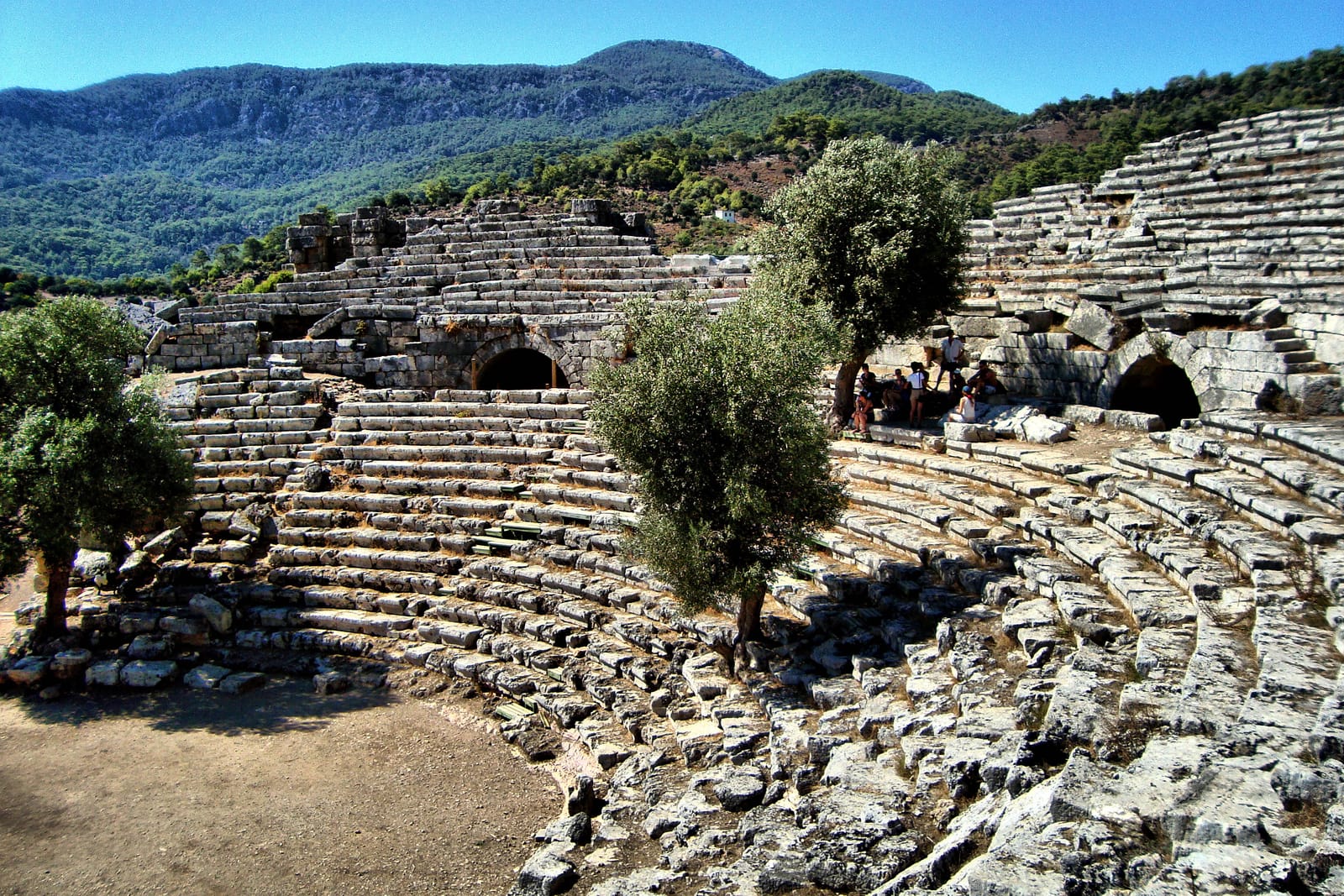
The city preserves a well-defined urban plan including a theatre, Roman baths, a basilica, temples, and an agora. The ancient harbor — now silted up and transformed into Iztuzu Lake — was once a thriving port. Herodotus noted that the inhabitants of Kaunos, despite speaking a language related to Carian, considered themselves originally from Crete.
The surrounding landscape is remarkable: the Dalyan Delta is now a protected area for loggerhead sea turtles (Caretta caretta), and boat trips from Dalyan to the site pass through reed-lined channels with the tombs rising dramatically above.

DALYAN-KAUNOS-TURKEY - panoramio | Haluk Comertel (CC BY 3.0)
Beyond the iconic tombs, the city's urban fabric reveals its prosperity and cosmopolitan nature. Excavations have uncovered a well-preserved Hellenistic theater with a capacity for 5,000 spectators, a large agora flanked by stoas, and a monumental Roman bath complex. The city center was protected by a substantial Carian fortification wall, later expanded. Daily life is evidenced by finds of imported Attic pottery, local coinage, and inscriptions detailing civic decrees and trade regulations. Kaunos was a significant exporter of salt, dried fish, and figs, with trade links across the Aegean. Its decline was a protracted process. While the silting harbor crippled its maritime economy from the late Roman period, the city remained inhabited into the early Byzantine era, as shown by a basilica built within the former temple precinct. It was eventually abandoned, likely due to a combination of economic stagnation, malaria from the marshes, and shifting regional power centers.