Overview
Amisos — one of the great cities of the ancient Black Sea coast — lies buried beneath the modern city of Samsun. Despite this challenging archaeological context, chance discoveries have revealed some of the most spectacular ancient artifacts in Turkey, including painted tomb chambers of extraordinary artistic quality.
Founded as a Greek colony (traditionally by Milesians, later refounded by Athenians around 437 BCE), Amisos became a major commercial hub of the southern Black Sea coast. The city rose to particular prominence under the Pontic Kingdom, serving as one of the residences and strongholds of Mithridates VI Eupator during his wars against Rome.
"Amisos, a city of Pontus, well fortified and with a good harbor."
— Strabo, c. 7 BCE - 23 CE
The most sensational discoveries at Amisos are the painted rock-cut tombs found on the Amisos Hill within the modern city. Discovered beginning in 1995, these tombs — dating to the Hellenistic and early Roman periods — preserve vivid wall paintings depicting floral garlands, architectural elements, and mythological scenes in colors that remain remarkably bright after two millennia. Intact grave goods including gold jewelry, glass vessels, and bronze artifacts accompanied the burials.
The Amisos Hill tombs have been developed into an underground museum, allowing visitors to experience the painted chambers in situ. The discoveries suggest that other significant tombs and structures remain undiscovered beneath Samsun, and ongoing rescue excavations during construction projects regularly yield new finds from the ancient city.

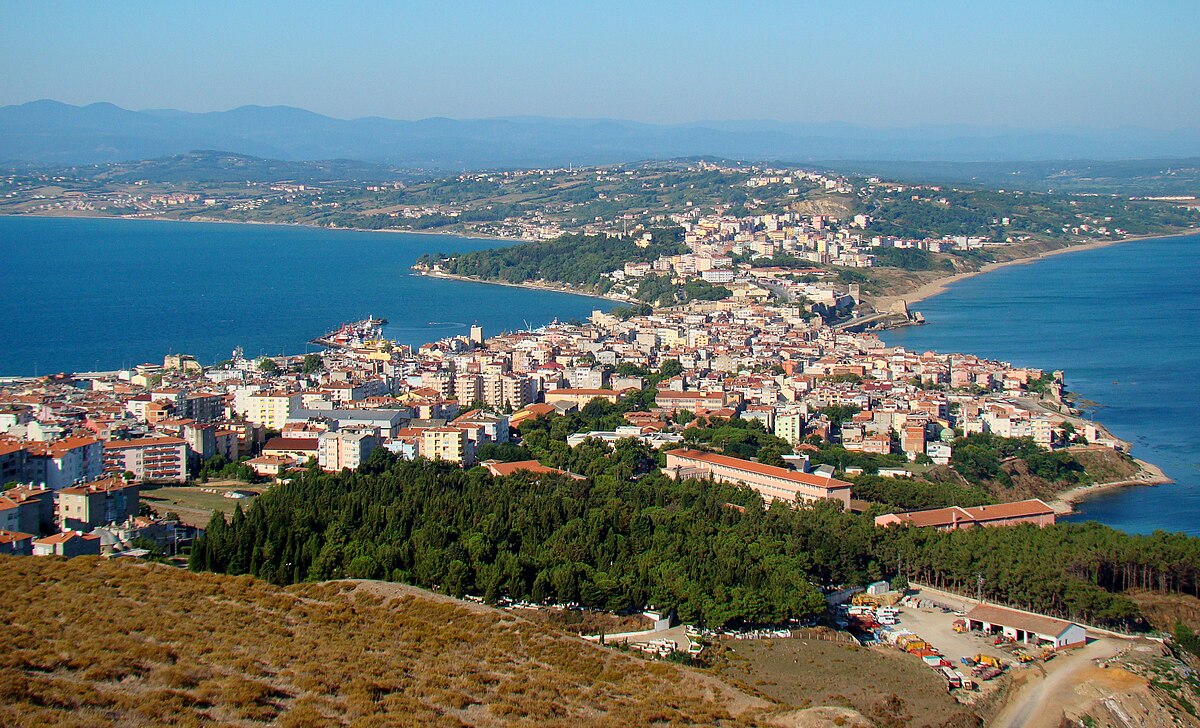
Samsun - panoramio (11) | sami yılmaz (CC BY 3.0)
Beyond its tombs, archaeological work has revealed aspects of the living city. Excavations led by archaeologist Dr. Atakan Akçay in the 2000s uncovered sections of the city's robust Hellenistic fortification walls and a paved street, hinting at a planned urban layout. The city's economic vitality is attested by its prolific coinage, minted from the 4th century BCE, and by finds of imported amphorae from Rhodes, Sinope, and other centers, marking it as a key port in the Black Sea's commercial network, exporting regional resources like timber, grain, and metals.
The city's fate mirrored that of the Pontic Kingdom. After the defeat of Mithridates VI by Pompey in 63 BCE, Amisos was granted the status of a free city within the Roman province of Bithynia et Pontus. It continued as a significant provincial center into the Byzantine era, though its prominence gradually waned. The archaeological layers show evidence of destruction, likely from the Gothic raids of the 3rd century CE, and later phases of rebuilding before the site was ultimately buried beneath the medieval and modern development of Samsun.