
Atlas AnatoliaAtlas Anatolia
Lycian sarcophagi standing among the ruins of Cyaneae with mountains in the background

Cyaneae

Yavu500 BCE – 300 CE
ClassicalHellenisticRomanLycianRomanAntalya

Sarcophagi

Over 40 monumental Lycian "Gothic" sarcophagi with relief carvings

Lycian League

Member of the ancient world's most sophisticated federal democracy

Theater

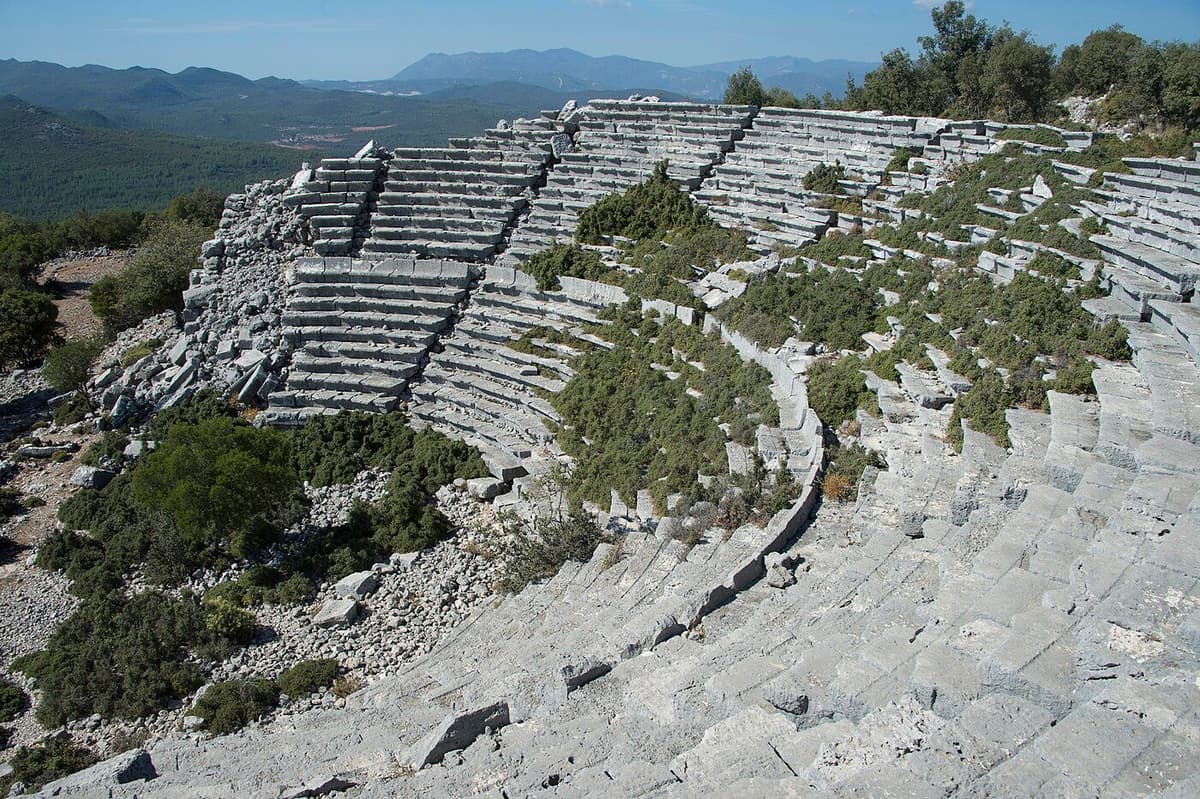
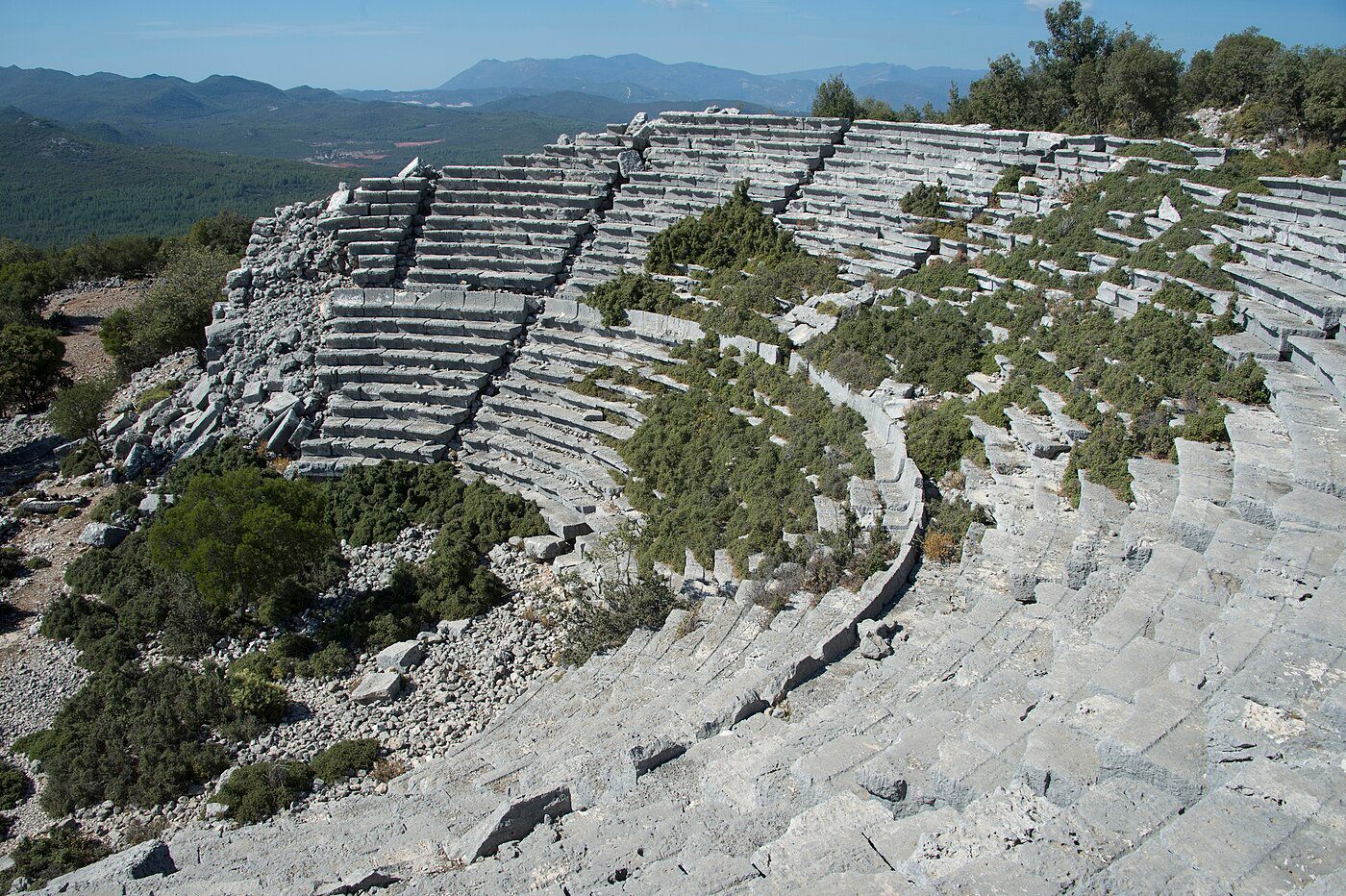
Well-preserved Roman theater for approximately 2,500 spectators

Inscriptions

Lycian-language tomb inscriptions documenting family lineages

Acropolis

Fortified hilltop with polygonal Lycian and Roman masonry walls

Province

Antalya, Mediterranean coast near Kas

Cyaneae's extraordinary concentration of Lycian sarcophagi makes it an essential site for understanding Lycian funerary culture and the social structures that produced such lavish commemoration of the dead.”

WFrom Wikipedia

Cyaneae is an ancient Lycian hilltop city with over 40 monumental sarcophagi, a Roman theater, and inscriptions documenting its participation in the Lycian League federal democracy.

Read full article on Wikipedia

Overview

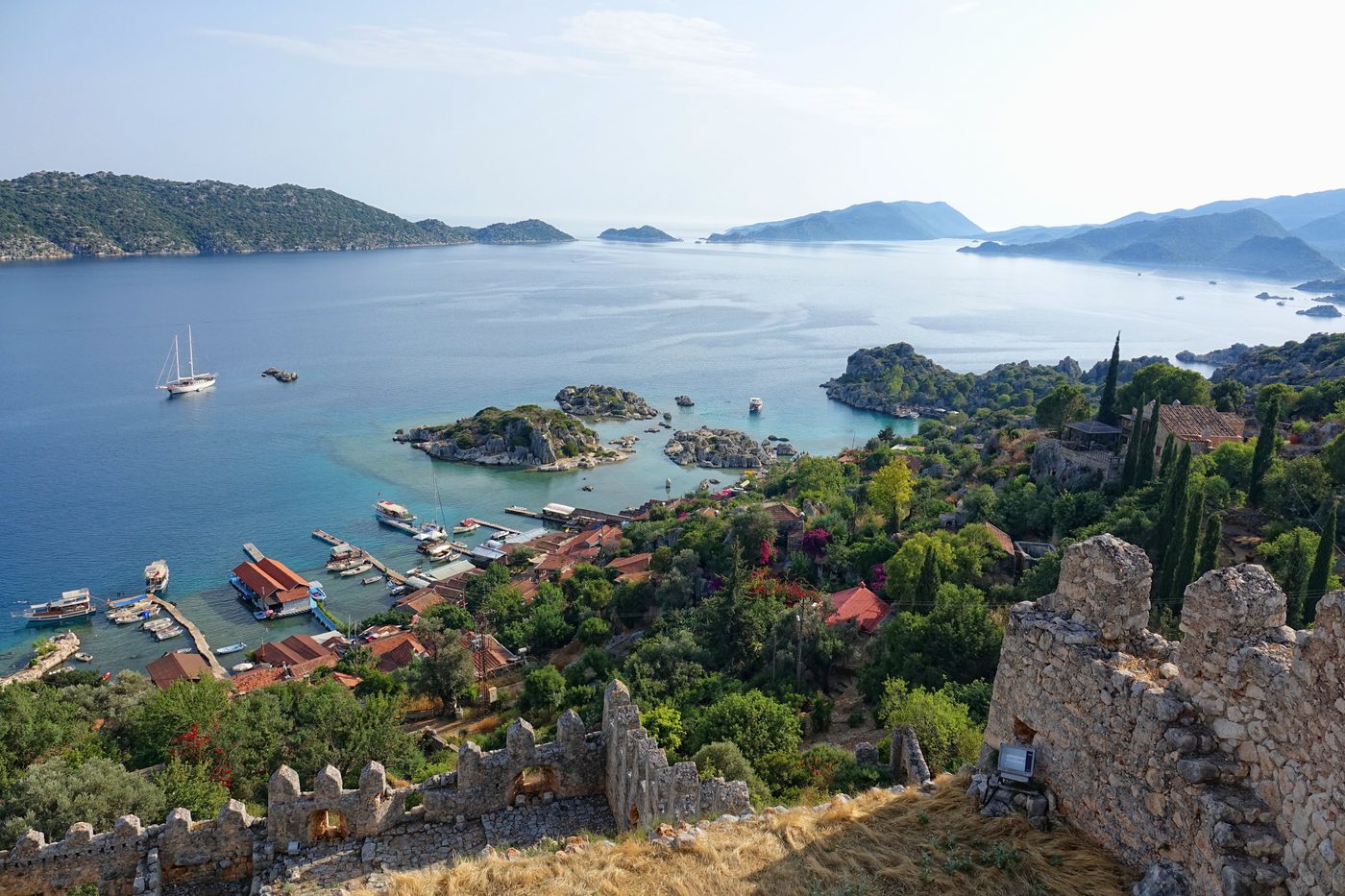
Cyaneae (also written Kyaneai) is a spectacular ancient Lycian city perched on a fortified hilltop near the modern village of Yavu in Antalya province, approximately 25 kilometers northwest of Kas. The site is renowned for possessing one of the densest concentrations of Lycian funerary monuments anywhere in the ancient world — over 40 monumental rock-cut sarcophagi standing amid the ruins of the city, creating a landscape unlike any other in Mediterranean archaeology.

The sarcophagi at Cyaneae are predominantly of the distinctive Lycian "Gothic" type, featuring pointed arch lids that resemble inverted boat hulls, a form unique to the Lycian civilization. Many bear relief carvings depicting battle scenes, funeral processions, and mythological narratives, while several carry Lycian-language inscriptions identifying the tomb owners and their families. The sheer density of these monuments — clustered along paths and among buildings — gives the impression that the city of the dead was inseparable from the city of the living.

"The Lycians bury their dead on elevated places, believing the soul rises more easily to the sky."
— Herodotus, c. 440 BCE

Beyond its funerary architecture, Cyaneae preserves substantial remains of its civic infrastructure. A well-preserved Roman theater with a capacity of approximately 2,500 spectators occupies a hillside position with commanding views across the Lycian landscape. The city walls, partially constructed in fine Lycian polygonal masonry and partially in later Roman ashlar, trace the contours of the hilltop acropolis. A Roman bath complex, library building, and sections of the agora have been identified through excavation.

The city participated in the Lycian League, the ancient federal democracy praised by later political theorists including Montesquieu and the American Founding Fathers. Inscriptions from Cyaneae document its civic offices and its contributions to the League's military and financial obligations, providing evidence for the workings of representative government in antiquity.

Cyaneae Shepherd and herd 0175

Cyaneae Shepherd and herd 0175 | Dosseman (CC BY-SA 4.0)
Why It Matters

Cyaneae's extraordinary concentration of Lycian sarcophagi makes it an essential site for understanding Lycian funerary culture and the social structures that produced such lavish commemoration of the dead. The relief carvings and inscriptions on these tombs provide primary evidence for Lycian art, language, and family organization. As a member of the Lycian League — the ancient world's most sophisticated federal democracy — Cyaneae offers tangible evidence for the institutions of representative government that would later inspire Enlightenment political thought. The site demonstrates that democratic principles had deep roots in the Anatolian political tradition.

Stay curious

New stories and sites, once a month. No spam.

Evidence & Interpretation

Distinguishing what is well-established from what remains debated.

Well-Established Facts

4
  • Over 40 monumental Lycian sarcophagi with distinctive pointed-arch lids have been documented at the site, many bearing relief carvings of battle scenes and funeral processions.
  • Greek inscriptions document Cyaneae's membership in the Lycian League, listing civic magistrates and the city's financial contributions to the federal government.
  • A Roman theater with approximately 2,500-seat capacity has been excavated, along with a bath complex and portions of the agora and library building.
  • Lycian polygonal masonry in the earliest sections of the city wall demonstrates indigenous Lycian construction techniques predating the Hellenistic rebuilding of the fortifications.

Scholarly Inferences

1
  • The exceptional density of elite sarcophagi suggests Cyaneae had a disproportionately wealthy aristocratic class, possibly enriched through maritime trade or control of interior agricultural resources.

Debated Interpretations

1
  • The chronological relationship between the Lycian-language inscriptions and the Greek inscriptions at the site — and what this reveals about the pace of Hellenization in inland Lycia — is debated among epigraphers.

Discovery & Excavation

1892

Early documentation

Led by Otto Benndorf

Otto Benndorf and George Niemann documented the site's sarcophagi and visible ruins during their survey of Lycian monuments for the Austrian Archaeological Institute.

1994–2010

Tubingen University excavations

Led by Frank Kolb

Frank Kolb led comprehensive excavations documenting the city's urban plan, theater, bath complex, and the full extent of the sarcophagus field.

2002

Epigraphic survey

Systematic epigraphic documentation recorded all Lycian and Greek inscriptions at the site, providing evidence for civic organization and Lycian League membership.

2011–2016

Settlement pattern study

Regional survey around Cyaneae documented the broader settlement hierarchy of the territory the city controlled, including rural sanctuaries and farmsteads.

2019

Sarcophagus conservation

Conservation project assessed the condition of the carved sarcophagi and implemented protective measures against weathering and vegetation damage.

More Photos

Museum Artifacts

Community Photos

Share your experience

Have you visited this site? Upload your photos to help others discover it.

Location

Related Sites

Sources

  • Lykische Studien 6: Die Siedlungskammer von KyaneaiFrank Kolb (2003)
  • The Lycian League and the Federal Principle in AntiquityA.H.M. Jones (1971)
  • Wikipedia — CyaneaeLink

Research Papers

Stay in the loop

Get notified when we add new sites or major features. We send at most 1–2 emails per year. We never sell your email.

Atlas AnatoliaAtlas Anatolia

An interactive atlas of ancient Anatolian sites. Explore civilizations, monuments, and stories across millennia.

info@atlasanatolia.com

© 2026 Atlas Anatolia. Content is provided for educational purposes.

Map data © OpenStreetMap contributors