Overview
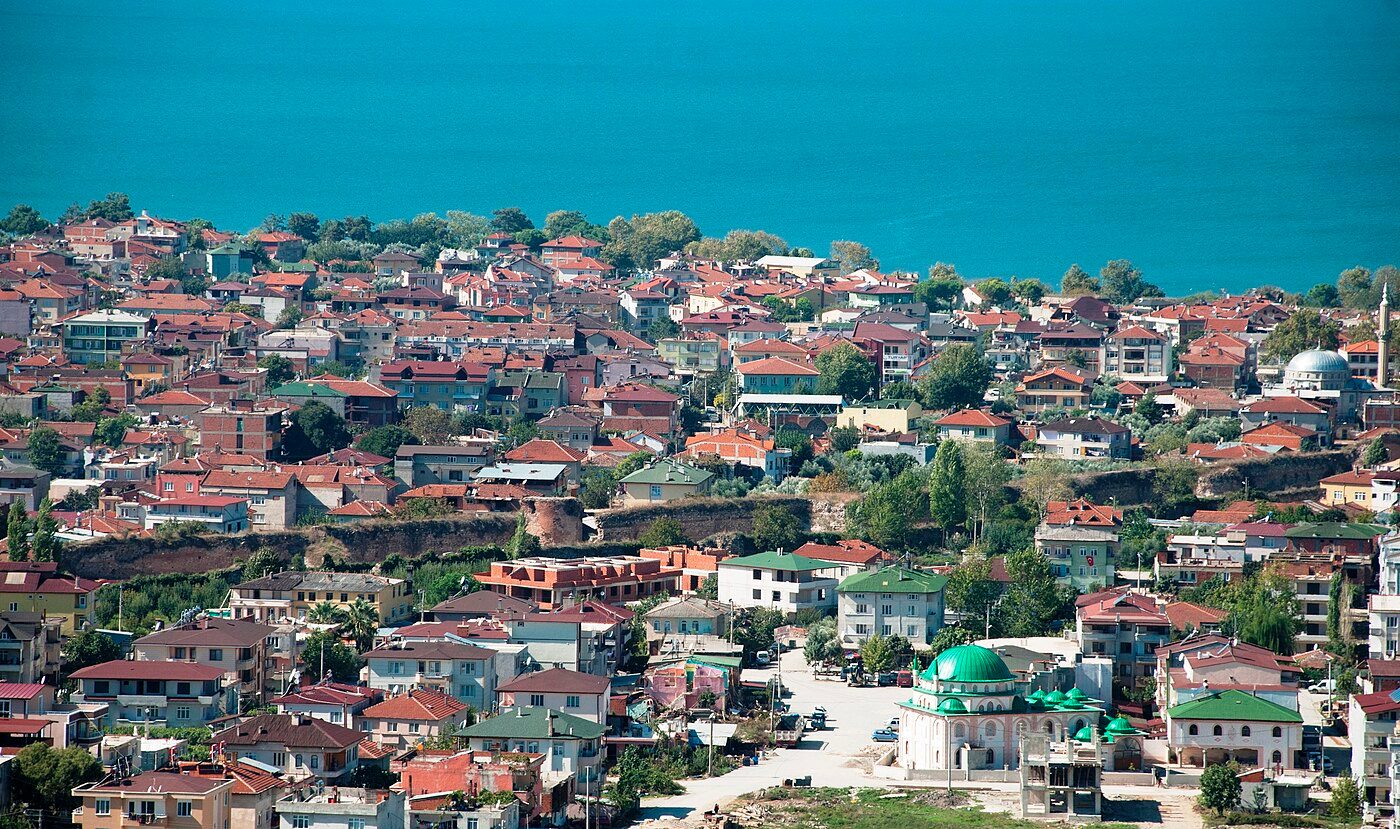
Cyzicus was one of the most powerful and prosperous cities of the ancient world, situated on the Kapıdağ Peninsula (ancient Arctonnesus) which juts into the southern Sea of Marmara in modern Balıkesir province. In antiquity, Cyzicus occupied a near-island connected to the mainland by a narrow isthmus, a position that gave it control of vital sea routes and access to some of the richest agricultural land in Asia Minor.
According to Greek mythology, Cyzicus was named after King Cyzicus, who was tragically killed by Jason and the Argonauts in a case of mistaken identity during their quest for the Golden Fleece. Apollonius of Rhodes describes how the Argonauts, having been hospitably received by King Cyzicus, were driven back to shore by a storm during the night and, not recognizing their hosts in the darkness, fought a battle in which Jason killed the young king. The historical colony was founded by Milesian Greeks around 675 BCE and rapidly grew wealthy through trade, fishing, and the famous Cyzicene electrum coinage (kyzikenos) that became a standard currency across the eastern Mediterranean.
"Cyzicus is a city of Mysia, very beautifully situated on an isthmus."
— Strabo, c. 7 BCE - 23 CE
Under Roman rule, Cyzicus reached its greatest glory. The city was rewarded for its loyalty during the wars against Mithridates VI of Pontus and became one of the wealthiest cities in the province of Asia. The Temple of Hadrian at Cyzicus, completed around 167 CE, was one of the largest and most magnificent temples in the ancient world. Ancient sources describe it as rivaling the Temple of Artemis at Ephesus in grandeur, with Corinthian columns reportedly over 21 meters (70 feet) tall and lavish sculptural decoration. The temple was so enormous that later writers counted it among the wonders of the world, though earthquake damage and stone-robbing over the centuries have reduced it to scattered architectural fragments.
Cyzicus also boasted a massive amphitheater, extensive city walls, harbors on both sides of the isthmus, and a sophisticated aqueduct system. The city's strategic importance was demonstrated in 73 BCE when the Roman general Lucullus brilliantly defended it against a massive siege by Mithridates VI, a victory that turned the tide of the Third Mithridatic War. Cyzicus remained significant into the Byzantine period but declined after devastating earthquakes in the 7th and 8th centuries, and its stones were extensively quarried for construction projects in Istanbul and elsewhere.

Kizikos Hadrian Tapınağı kalıntıları | Kızıldeniz (CC BY-SA 4.0)