Overview
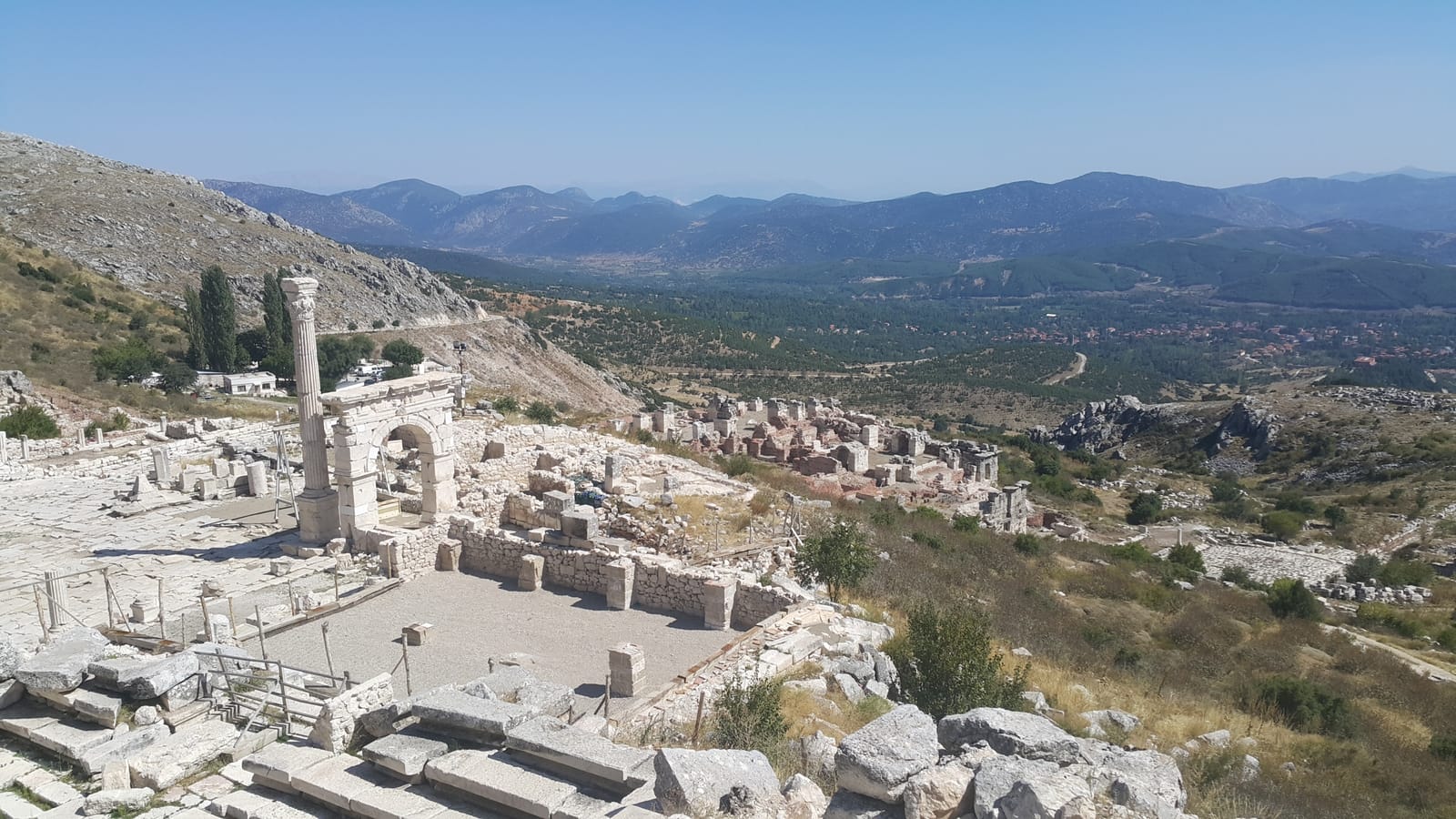
Yalvac — ancient Antioch in Pisidia — occupies a strategic position on the road connecting the Aegean coast to the Anatolian interior, near the beautiful lake district of Isparta province. Founded by the Seleucid dynasty in the 3rd century BCE and later established as a Roman colony by Augustus, the city became one of the most important urban centers of central Anatolia.
The site holds particular significance for the history of Christianity. According to the Acts of the Apostles (chapters 13-14), St. Paul visited Antioch in Pisidia during his first missionary journey around 46-48 CE and delivered his first recorded sermon in the city's synagogue. This sermon, laying out the theological case for Christianity's fulfillment of Jewish prophecy, marks a pivotal moment in the spread of Christianity beyond the Jewish community.
"Antioch of Pisidia is a Roman colony. I have myself seen the city and the lake in front of it."
— Strabo, c. 7 BCE - 23 CE
The monumental sanctuary of Augustus (the Imperial cult temple) dominates the upper city, featuring a propylaeum, temenos, and semicircular plaza. The Res Gestae — Augustus's account of his achievements — was inscribed on the temple walls, with fragments providing important textual evidence for this key Roman document. The civic center below includes a large theatre, bath complex, colonnaded streets, and an aqueduct.
The Yalvac Museum houses an exceptional collection of artifacts from the site, including inscriptions, sculpture, and architectural elements that document the city's life across centuries.

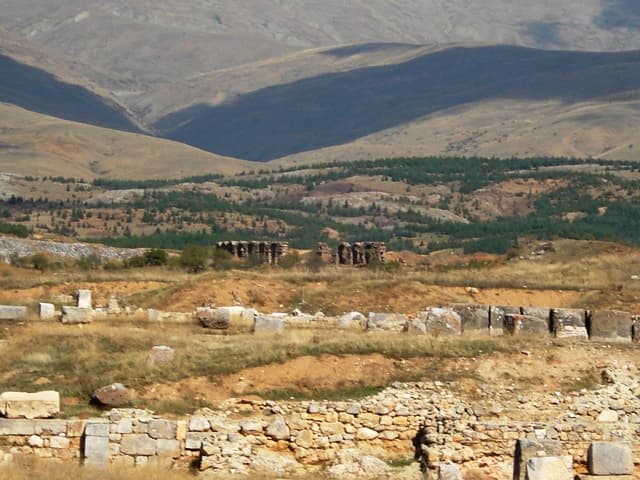
Yalvac Ev - panoramio | Gökceler (CC BY-SA 3.0)
The city's urban plan, laid out on a Hippodamian grid, featured a monumental cardo maximus and decumanus. Its public infrastructure was extensive, including a large theater built into the hillside, a bath-gymnasium complex, and a sophisticated water supply system fed by a 10km-long aqueduct terminating in a grand nymphaeum. These structures reflect the wealth and Roman colonial identity of its inhabitants, who engaged in agriculture, local crafts, and trade facilitated by the city's position on the Sebaste Road connecting the Anatolian plateau to Pamphylia.
Antioch prospered into the late Roman and early Byzantine periods, becoming a bishopric. However, its strategic location also made it vulnerable. The city suffered from Arab raids in the 7th and 8th centuries CE, which, combined with shifting trade routes and regional instability, led to a gradual decline. By the 12th century, the urban center had largely been abandoned, with settlement shifting to the modern town of Yalvaç nearby, leaving the ancient ruins remarkably well-preserved for archaeological investigation.