Overview
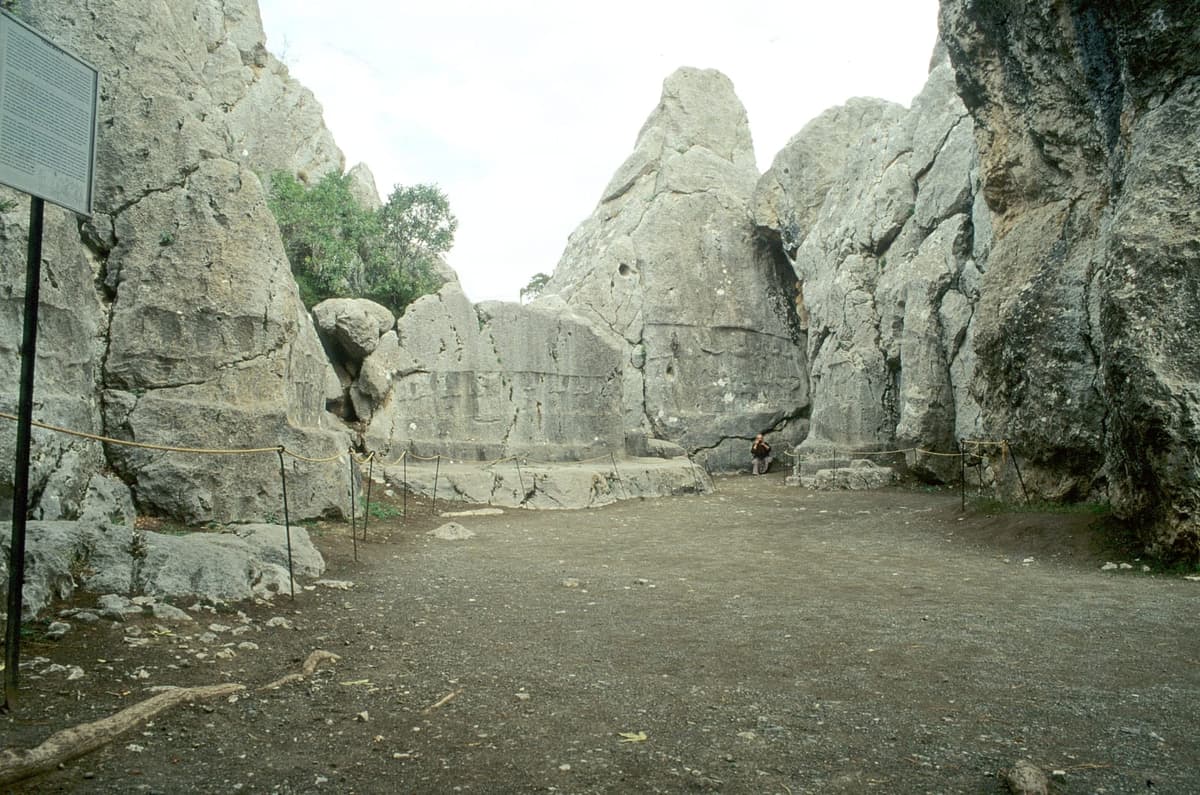
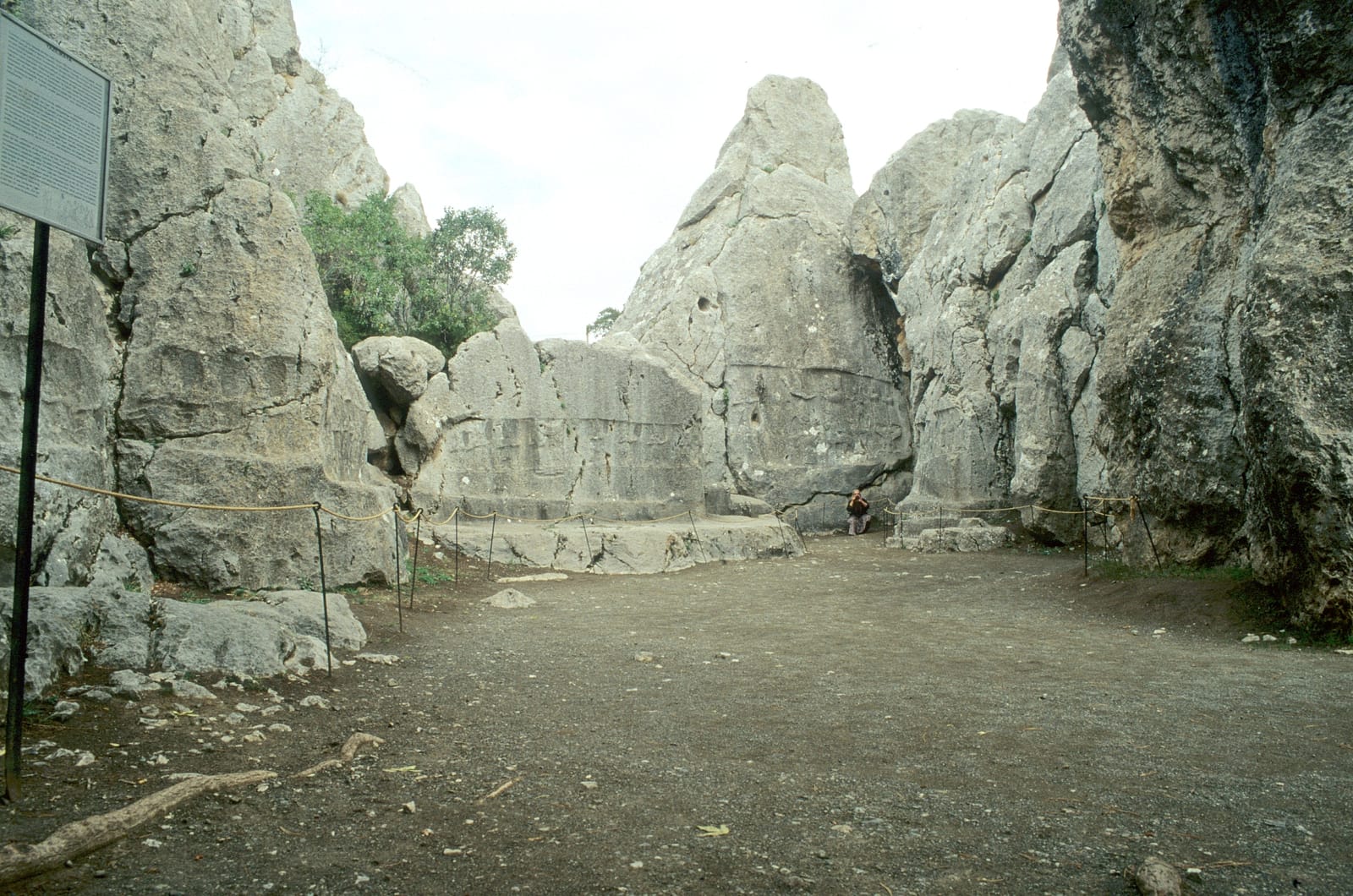
Yazilikaya — meaning "inscribed rock" in Turkish — is the supreme religious monument of the Hittite Empire. Located approximately two kilometers northeast of the Hittite capital Hattusha, this open-air sanctuary consists of two natural rock chambers adorned with the largest known collection of Hittite relief carvings.
Chamber A, the larger gallery, depicts a grand procession of over sixty deities converging on the central scene where the Storm God Teshub meets the Sun Goddess Hepatu. The gods march from the left, the goddesses from the right, in a carefully ordered hierarchy that provides invaluable information about Hittite religious organization and the Hurrian influences that shaped it.
"The Hittites carved their gods into the living rock, a procession of deities in a sacred place."
— Charles Texier (c. 1834)
Chamber B, a narrower gallery accessible through a cleft in the rock, contains the most accomplished sculptures. The famous "Sword God" — a deity depicted as a sword plunged into the earth with a human head as its pommel — is unique in ancient Near Eastern art. Reliefs of King Tudhaliya IV embraced by the god Sharruma demonstrate the intimate relationship between royal and divine authority.
The sanctuary reached its peak under Tudhaliya IV (c. 1237-1209 BCE), who commissioned the most elaborate carvings. Recent research by Eberhard Zangger and others has proposed that Chamber B may have functioned as a funerary monument for Tudhaliya IV, though this interpretation remains debated.

Museum Hattusa - Boğazköy Museum, Boğazköy, Çorum, Turkey 26 | Murat Özsoy 1958 (CC BY-SA 4.0)
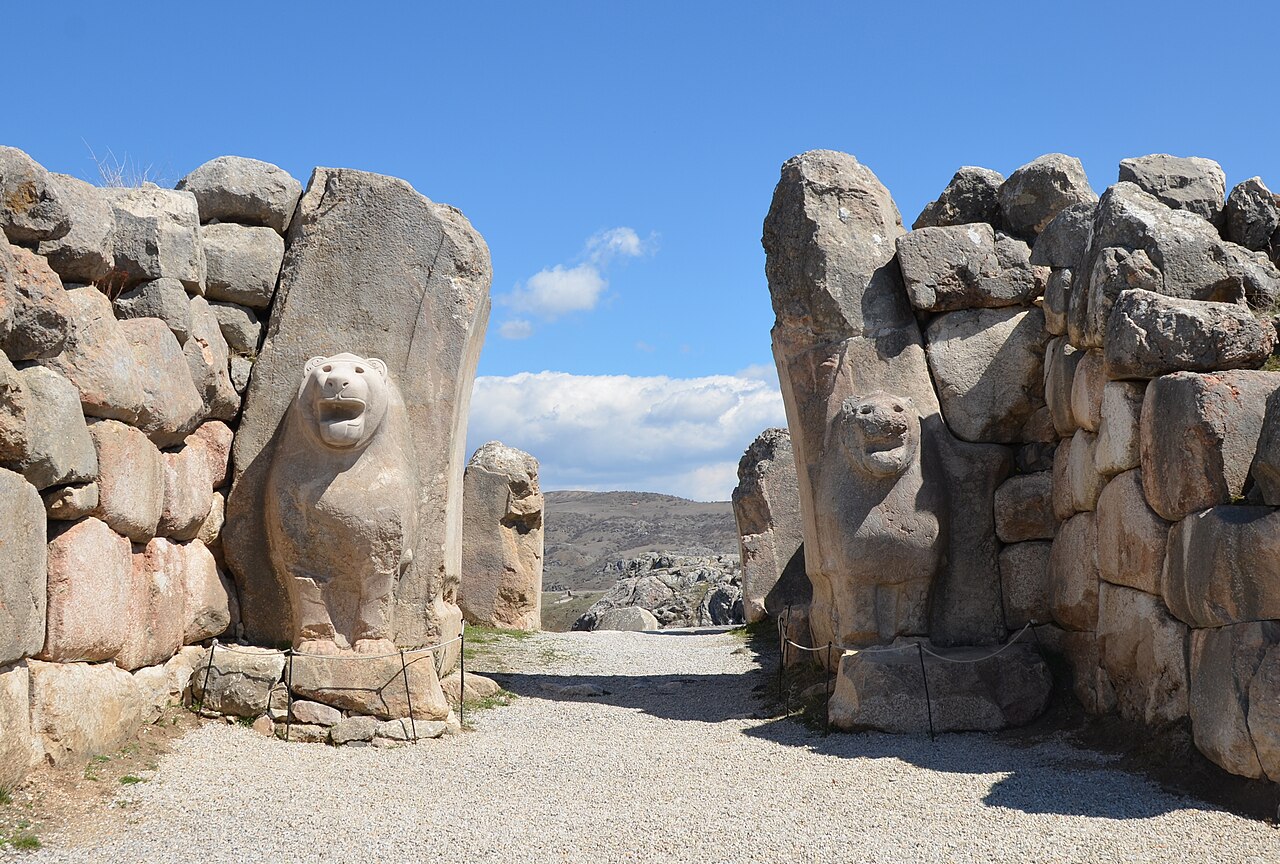
The sanctuary was not merely a natural grotto; it was integrated into a formal architectural complex. In the 13th century BCE, a monumental gatehouse and surrounding walls were constructed, channeling visitors from the capital along a processional way and creating a defined sacred precinct. This architectural intervention transformed the site from a potentially ancient place of worship into an official state sanctuary of the Hittite Empire, reflecting the centralization of religious authority under the king.\n\nThe site's decline is directly tied to the broader collapse of the Hittite Empire around 1180 BCE. Following the abandonment of Hattusha, Yazilikaya fell into disuse and was gradually buried by erosion and vegetation. Its rediscovery by European travelers in the 19th century, followed by systematic archaeological work in the 20th century, has allowed this unparalleled religious document to be deciphered, providing the most complete visual representation of an ancient Near Eastern pantheon.