In the summer of 2000, a young woman's face stared up from the earth on the banks of the Euphrates. She had dark eyes, a garland in her hair, and an expression that seemed to hold some private amusement. She had been looking at the ceiling of a Roman dining room for about 1,800 years. In a few weeks, the rising waters of the Birecik Dam reservoir would cover her forever.
The archaeologists had almost no time. They cut her from the floor, packed her in plaster, and carried her to safety. She is now the most famous mosaic in Turkey, known simply as the Gypsy Girl, and her rescue was the final act in one of the most dramatic archaeological salvage operations of the modern era.
A City at the Crossing
Zeugma means "bridge" or "crossing" in Greek, and the city earned its name. Founded by one of Alexander the Great's generals around 300 BCE, it sat where the main east-west road crossed the Euphrates. It was, in modern terms, a border town and a boomtown. Roman legions were stationed here. Merchants from Mesopotamia, Persia, India, and China passed through. Money flowed. The wealthy built lavish villas on the hillside overlooking the river and decorated their floors with some of the finest mosaics in the Roman world.
Then the Sasanian Persians sacked the city in 253 CE. The villas burned, their upper floors collapsed, and the mosaics were buried under a meter of rubble and ash. It was a catastrophe that turned out to be a gift: the rubble sealed the floors in near-perfect condition, and the dry climate of southeastern Turkey preserved them for the next seventeen centuries.
The Dam
Turkey's Southeastern Anatolia Project called for 22 dams across the Tigris and Euphrates river systems. The Birecik Dam, completed in 2000, would create a reservoir that would flood the lower portions of ancient Zeugma.
Archaeologists had known since the 1990s what was at stake. Preliminary surveys had revealed extraordinary mosaics in the villas closest to the river. But funding was slow, political will was limited, and the dam construction proceeded on schedule. By the time international attention focused on Zeugma, the water was already rising.
The Rescue
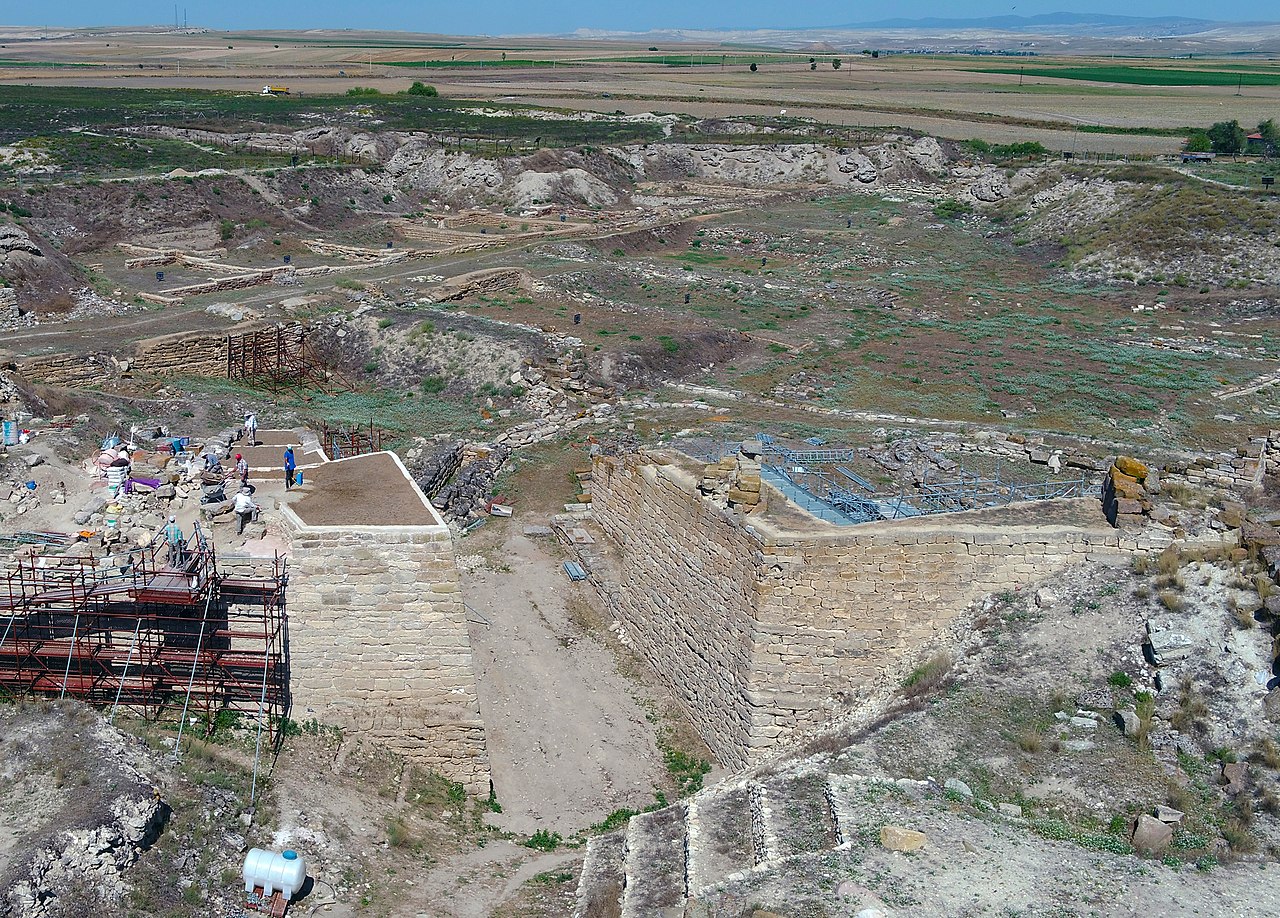
What followed was part archaeology, part emergency response. In the final months before the flooding, a coalition of Turkish, French, and international teams descended on the site. They worked in shifts from dawn to dark, racing the waterline that crept higher each week.
The villa they called House 1 yielded the most spectacular finds. Room after room revealed floor mosaics depicting scenes from Greek mythology: Poseidon and the sea creatures, Achilles hiding among the women, Dionysus reclining with a leopard. The colors were extraordinary. Eighteen centuries underground had preserved the yellows, reds, and blues with an intensity that modern reproductions struggle to match.
The technique for removing a mosaic is slow and painstaking. You clean the surface, apply layers of fabric and adhesive, let each layer dry, then cut the mosaic from its bed in sections, flip them, and remove the original mortar from behind. It takes days per panel under normal conditions. The Zeugma teams did not have days. They worked with a precision that later earned international recognition, but those who were there describe the experience as agonizing. You could see the waterline approaching while you waited for glue to dry.
Not everything could be saved. Several rooms in the lower villas were already underwater before teams could reach them. Satellite imagery later confirmed that at least a dozen mosaic floors remain submerged beneath the reservoir, visible only to fish.
The Gypsy Girl
The mosaic now called the Gypsy Girl was found in the final days. She is not actually Romani or a girl. Scholars believe the image depicts one of the Maenads, the wild followers of Dionysus, or possibly a personification of the earth goddess Gaia. The name "Gypsy Girl" was given by local workers who thought she resembled Romani women of the region, and it stuck despite academic protests.
What makes her remarkable is the quality of execution. The face is composed of tiny stone tesserae, some no larger than a few millimeters, arranged with a skill that approaches painting. The slight asymmetry of the eyes, the shadow beneath the lower lip, the way the garland sits unevenly in the hair: these are the choices of an artist, not a craftsman following a pattern. When she was lifted from the floor and the plaster supports were removed, the conservators found that the back of the mosaic retained the original grid lines the artist had used to lay out the composition. It was like finding a painter's pencil sketch beneath the oil.
After the Flood
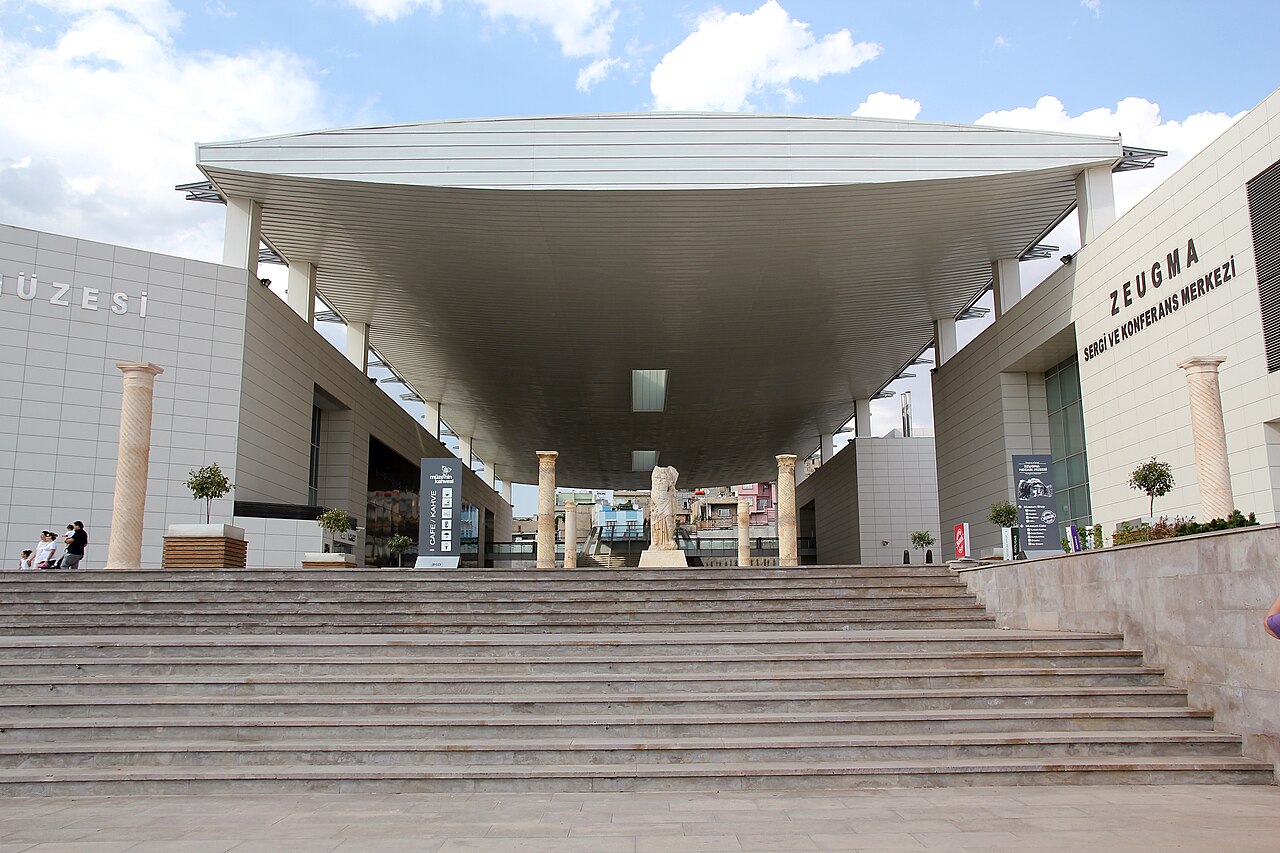
The Zeugma Mosaic Museum opened in Gaziantep in 2011. It is the largest mosaic museum in the world, housing more than 1,700 square meters of rescued floors. The Gypsy Girl sits in her own room, behind glass, at the center of the collection. On weekends, lines form to see her.
The mosaics that remain underwater have not been forgotten. Turkish and international teams have conducted underwater surveys using sonar and remote cameras. There is no current plan to recover them, but the technology exists, and the site is monitored.
Zeugma is a story about loss and rescue in roughly equal measure. The city that survived eighteen centuries underground could not survive the twenty-first century's appetite for hydroelectric power. But the mosaics that were saved have become something the original artists never intended: a symbol of what happens when archaeology and development collide, and of what can be achieved when people decide that some things are worth saving.