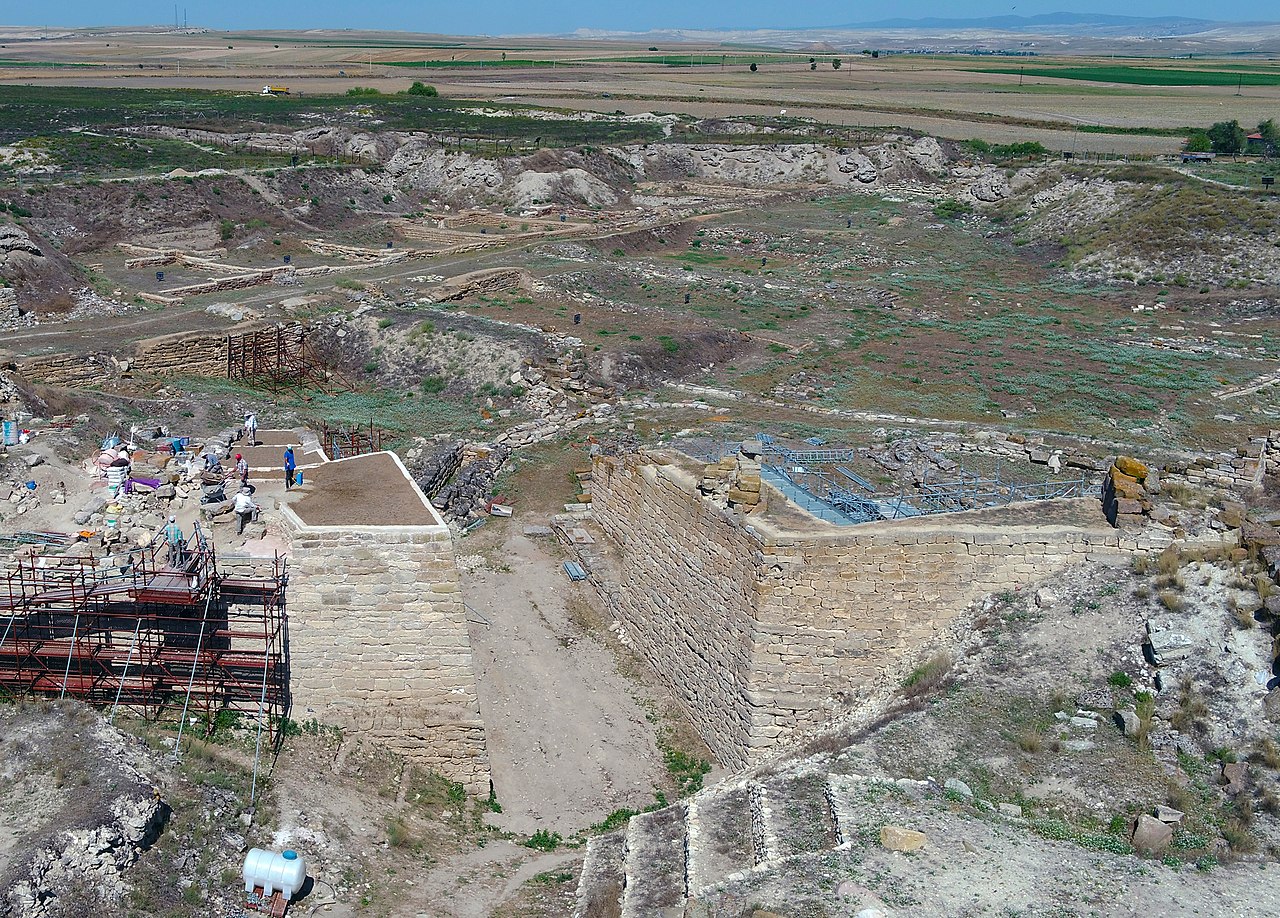
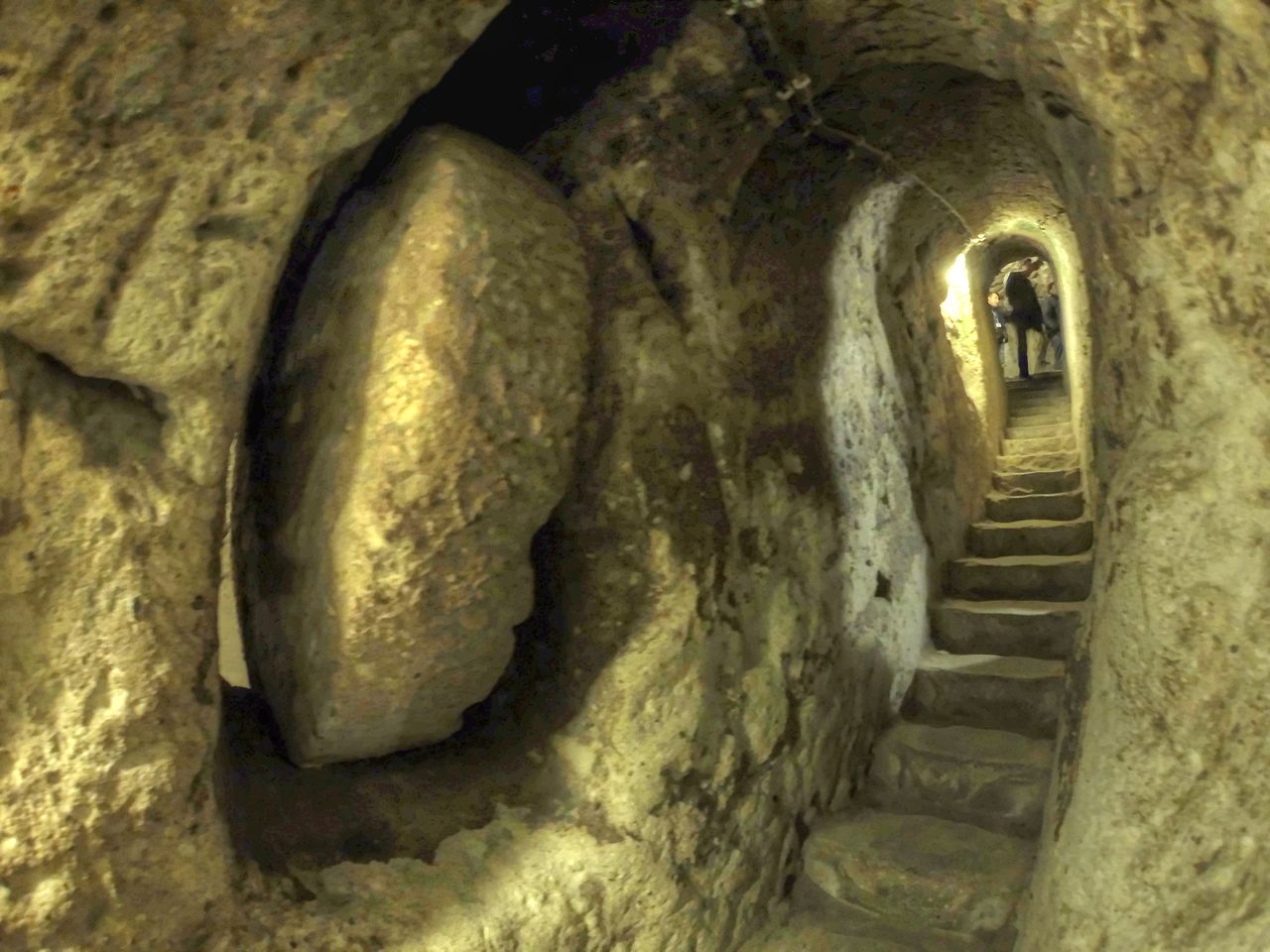
The entrance is unimpressive. A low stone doorway in a courtyard, the kind of thing you might mistake for a root cellar. Then the stairs begin, and they keep going down. At Derinkuyu, they go down eighteen levels, eighty-five meters into the volcanic tuff, deep enough to shelter twenty thousand people and their livestock in a city that most of the ancient world never knew existed.
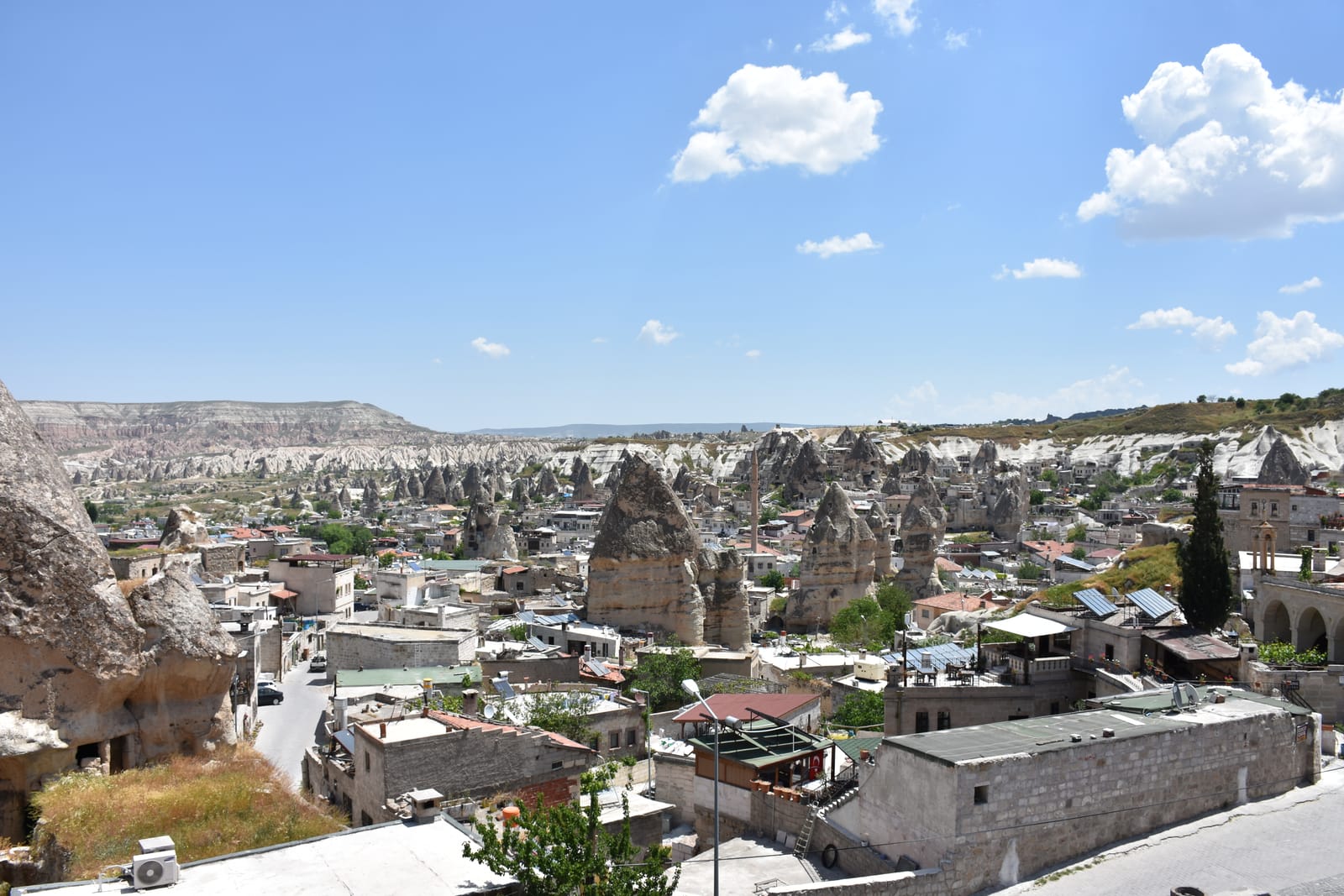
Cappadocia is famous for what rises above the ground: the fairy chimneys, the cave churches, the balloon-dotted sunrise. But what lies beneath the surface is stranger, older, and harder to explain.
Who Built Them?
This is where the mystery begins, because nobody is entirely certain. The soft volcanic tuff that underlies Cappadocia, deposited by eruptions millions of years ago, is easy to carve when freshly exposed but hardens on contact with air. It is an ideal material for underground construction, and people in the region seem to have recognized this very early.
The ancient Greek historian Xenophon, passing through Cappadocia around 400 BCE, described local people living in underground dwellings. The Hittites, who controlled the region a millennium earlier, may have carved the first chambers. Some archaeologists have suggested even older origins, pointing to grain storage pits that could date to the Neolithic period.
What is clear is that the underground cities as they exist today were massively expanded during the Byzantine era, between the sixth and tenth centuries CE. This was a period when Cappadocia sat on the front line between the Byzantine Empire and Arab armies that raided Anatolia with increasing frequency. The raids were seasonal and predictable in their unpredictability: a village might go years without seeing an enemy, then face a large mounted force with almost no warning.
The underground cities were the response. They were not permanent dwellings but refuges, designed to be occupied for weeks or months while raiders passed overhead.
The Architecture of Disappearance
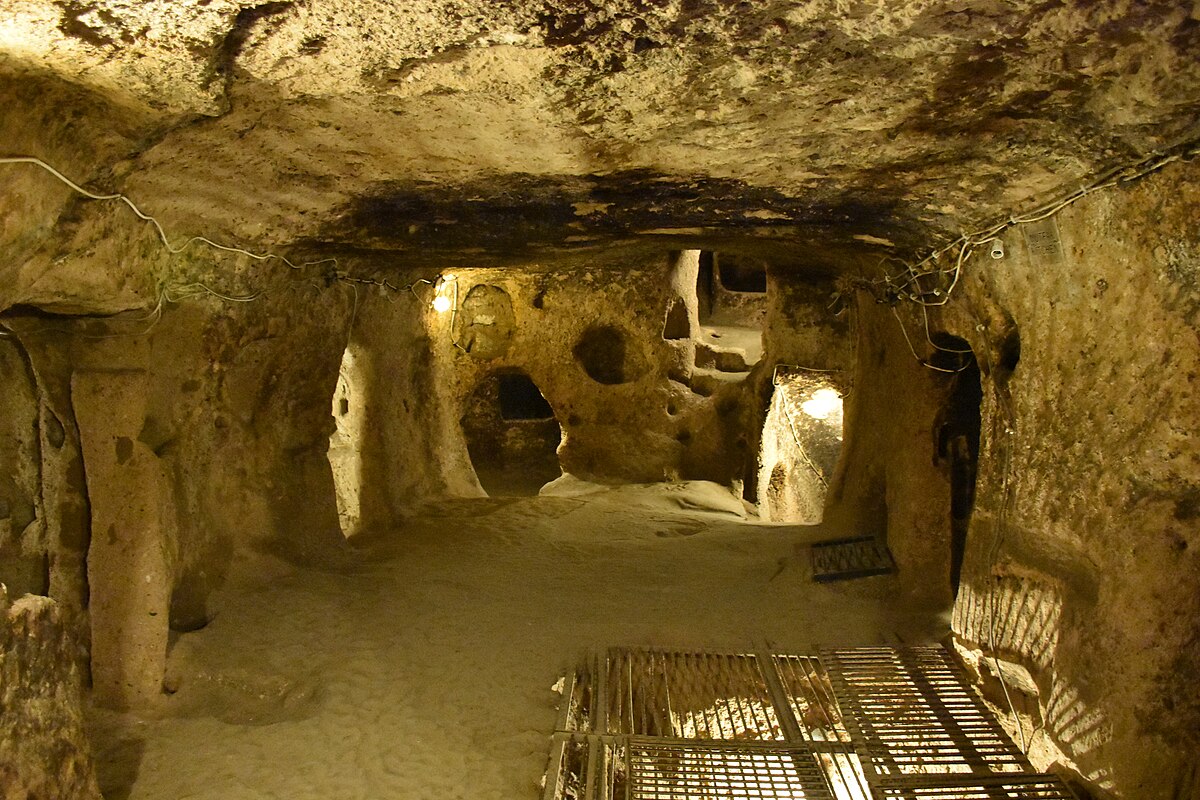
Walking through Derinkuyu or Kaymakli, you quickly realize these are not simple tunnels. They are engineered environments, designed with a sophistication that military architects would recognize.
Each level connects to the one below by narrow passages, barely wide enough for a single person. At critical junctions, massive circular stone doors, weighing up to five hundred kilograms, could be rolled into place from inside, sealing the passage completely. These doors could not be opened from the outside. An army above could not reach the people below without fighting through a series of chokepoints that no numerical advantage could overcome.
Ventilation was solved with shafts that doubled as wells, extending from the lowest levels to the surface. The engineering was precise enough that fresh air reached the deepest chambers and smoke from cooking fires was dispersed before reaching the surface. An invading army standing directly above an occupied underground city would see no smoke, hear no sound, and find no way in.
The cities contained everything needed for extended stays: storerooms for grain and oil, wine presses, kitchens, stables for livestock, chapels, and communal areas. Kaymakli has a room identified as a school. Derinkuyu has a large cruciform church on its lowest accessible level. The infrastructure suggests planning measured in months, not days.
What We Still Do Not Know
For all their impressiveness, the underground cities raise questions that archaeology has not fully answered.
The first is scale. More than two hundred underground sites have been identified in Cappadocia, ranging from simple two-room shelters to the vast complexes at Derinkuyu and Kaymakli. In 2014, construction workers in the nearby town of Nevşehir accidentally broke into what appears to be the largest underground city yet found, potentially extending deeper and wider than Derinkuyu. Exploration is ongoing, but early surveys suggest it may have sheltered up to forty thousand people.
The second question is communication. Derinkuyu and Kaymakli are connected by a tunnel approximately eight kilometers long. This is not speculation; the tunnel has been partially explored, though much of it remains blocked. An eight-kilometer tunnel through volcanic rock, deep underground, connecting two cities: the labor involved is staggering. What kind of threat justified this investment?
The third question is why they were abandoned. By the thirteenth century, the Arab raids had ceased, the Seljuk Turks controlled the region, and the underground cities fell out of use. Over the following centuries, the upper levels were used for storage, the entrances were partially blocked, and the cities were gradually forgotten. When a local man rediscovered the Derinkuyu complex in 1963 after noticing that his chickens kept disappearing through a crack in his basement wall, the find was treated as a sensation.
Visiting Today
Derinkuyu and Kaymakli are both open to visitors, though only a fraction of each complex is accessible. The passages are narrow, the ceilings are low, and claustrophobia is a real consideration. The temperature underground holds steady at about thirteen degrees Celsius year-round.
What stays with you after a visit is the quiet. Underground, cut off from wind and traffic and the ordinary sounds of the surface, you hear your own breathing and little else. The people who sheltered here heard the same silence, punctuated perhaps by the distant grinding of stone doors rolling shut above them, and waited in the dark for the world above to become safe again.