# Warrior Women of the Black Sea: The Amazon Legend in Anatolia
The Enduring Echo of a Legend
"The Amazons lived on the river Thermodon. They were a nation of women, mighty in war."
Herodotus, Histories IV.110 (c. 430 BCE)
The wind whipping across the Pontic coast of Anatolia carries more than the scent of salt and pine. For millennia, it has carried whispers of a formidable sisterhood, a society so extraordinary that ancient Greek historians chronicled them with a mixture of awe and dread: the Amazons. These warrior women, said to live without men, masters of the bow and horse, have long been relegated to the misty realms of myth. But what if the legend was not born in a vacuum of imagination, but etched into the very soil of the Black Sea region? A journey through the archaeological sites of Terme, Amisos, Giresun Island, and Sinop reveals a compelling narrative where myth and material culture converge, suggesting that the Amazon legend is a distant, distorted echo of powerful, real women who once shaped the cultural landscape of ancient Anatolia.
The Greek sources, from Homer’s Iliad to the histories of Herodotus, paint a vivid picture. The Amazons were daughters of Ares, god of war, and Harmonia. They inhabited the realms beyond the known world, around the river Thermodon (today’s Terme River). Their society was gynocratic; they mated with neighboring tribes for propagation but kept only female children, raising them as hunters, farmers, and warriors. They were archetypal antagonists, representing a terrifying inversion of the Greek patriarchal order. Yet, their tombs and cult sites were revered in Athens and across Greece. This duality — feared yet respected — hints at a deeper historical truth.

Red figure pelike, Amazon, warrior, 440-430 BC, AM Syracuse, 121428x | Zde (CC BY-SA 4.0)
The Thermodon Nexus: Unearthing the Homeland
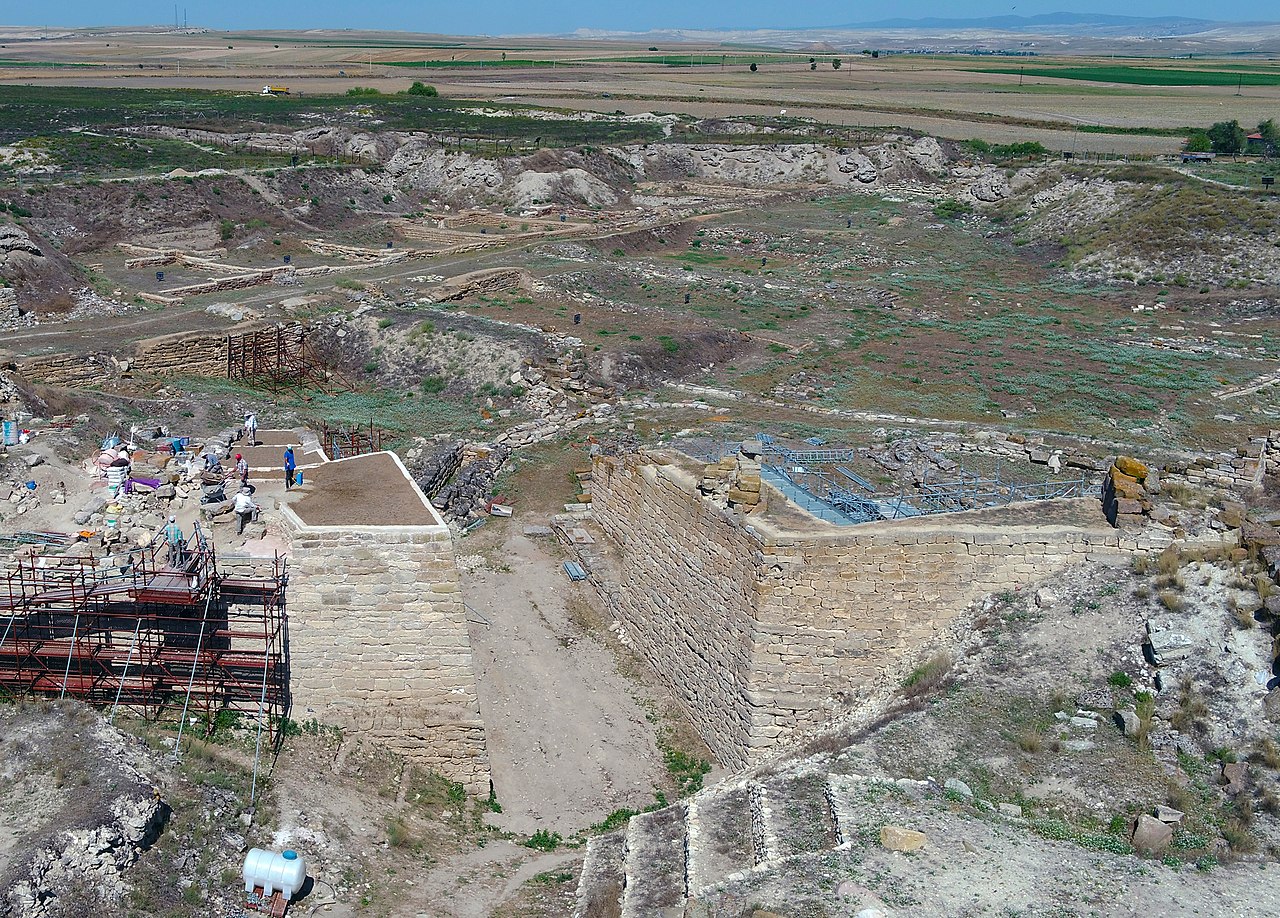
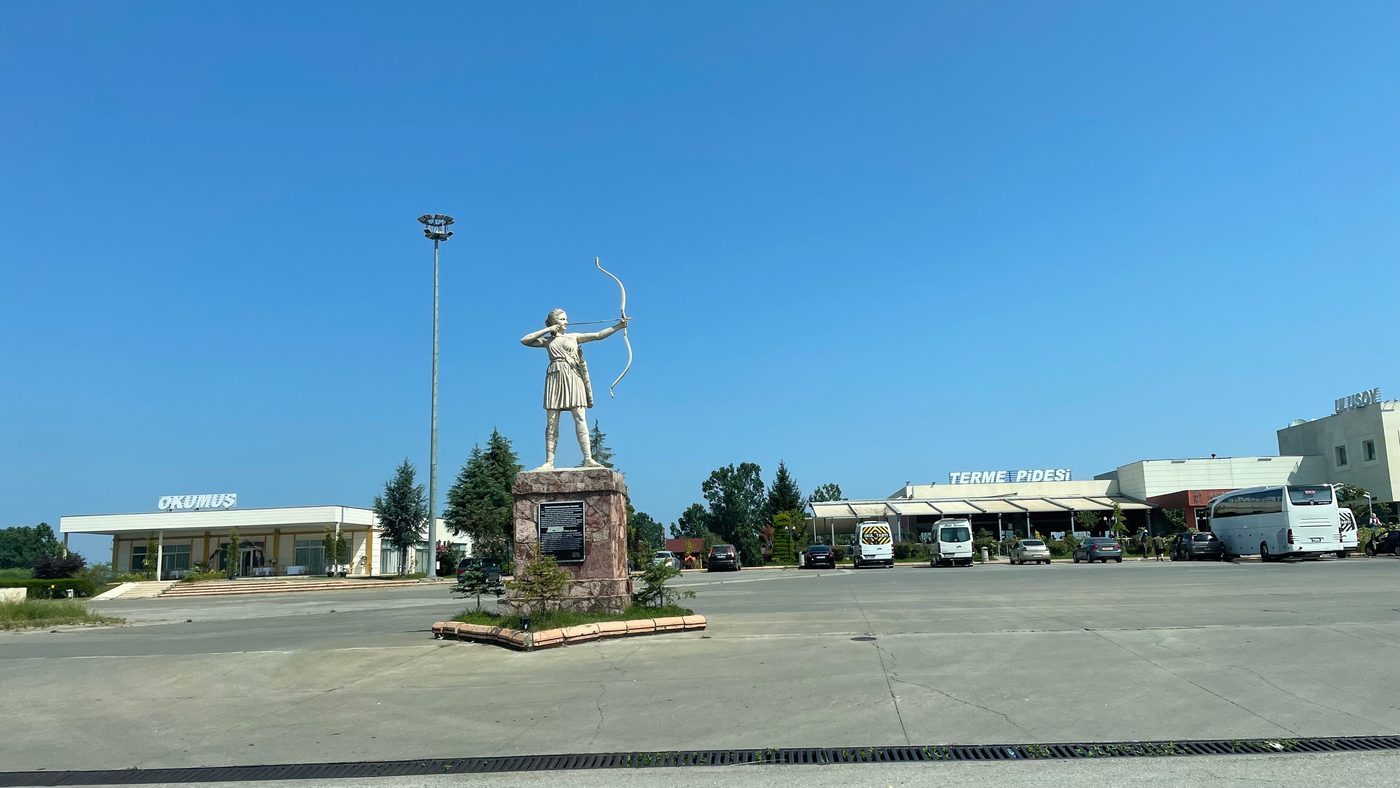
Our search for the roots of the legend begins at its epicenter: the Thermodon River basin, near modern Terme in Samsun Province. This is the undisputed Amazon heartland in classical texts. While a definitive "Amazon city" remains elusive, the archaeology of the region is telling. This is the land of the Iron Age tribes later known to the Greeks as the Khalybes and **Tibareni. Ancient sources, including Strabo, explicitly link these peoples to Amazonian customs, noting that their women worked the land and fought alongside men.
Excavations in the broader region have revealed a Scythian influence. The Scythians, nomadic horse-archers of the Eurasian steppe who ranged into Anatolia from the 7th century BCE onward, had a well-documented cultural practice: among them, some women were warriors. Archaeological discoveries from Scythian kurgans (burial mounds) across Ukraine and southern Russia, such as those at Pokrovka, have conclusively proven the existence of women buried with full arsenals — bows, quivers of arrows, spears, and armor — and with battle injuries. These were not mythical figures but a social reality of the steppe.

Red figure pelike, Amazon, warrior, 440-430 BC, AM Syracuse, 121428 | Zde (CC BY-SA 4.0)
The theory gaining significant traction among archaeologists is that the Greek colonists, who began establishing settlements on the Black Sea coast from around 670 BCE, encountered these steppe-influenced tribes of the Pontic hinterland. The sight of women riding, hunting, and fighting would have been profoundly shocking to the Greek worldview. Over centuries of contact, trade, and conflict, these observations crystallized into the elaborate myth of the Amazon nation. The Thermodon region, then, is not the site of a literal all-female city, but the cultural crossroads where Greek narrative met Anatolian and steppe reality.
Amisos: Where Gold Bears Witness
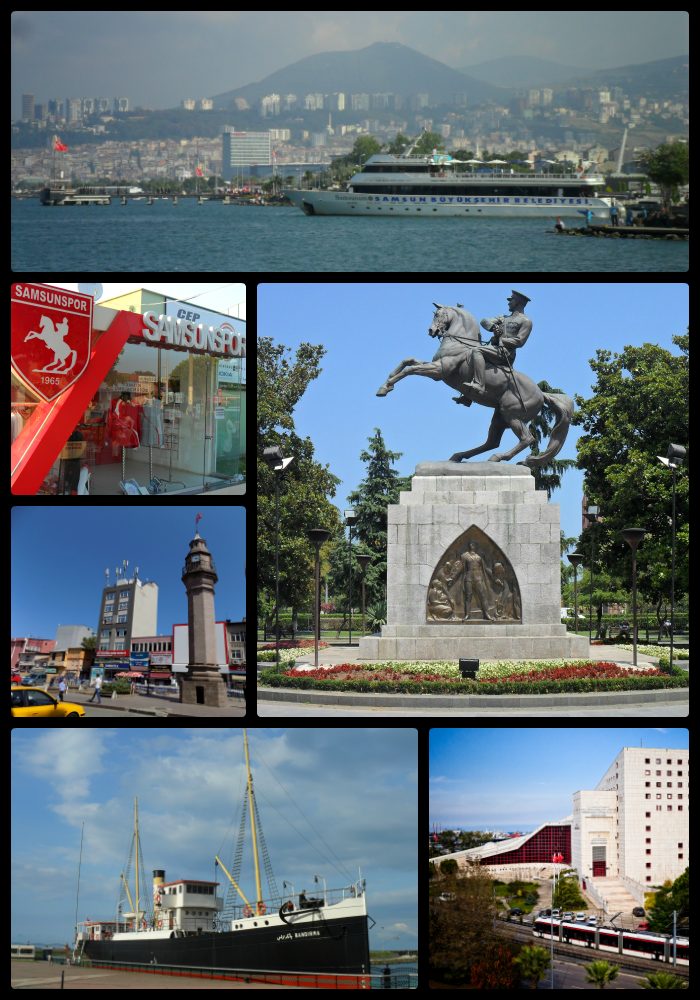
A short journey west from Terme brings us to the ancient port city of Amisos (modern Samsun). Founded in the 6th century BCE, Amisos became a vibrant Greek colony and later a pivotal Pontic city. It is here that some of the most tantalizing archaeological evidence for warrior women in Anatolia has emerged.

Themiscyra (Pontus) Turkey | Metuboy (CC BY-SA 4.0)
In the 1990s, during construction work in the İkiztepe district, a spectacular tomb dating to the 4th century BCE was discovered. Dubbed the "Amisos Treasure," it contained breathtaking gold jewelry, including a stunning diadem, but also a silver gorytos — a combined bow-case and quiver of unmistakably Scythian design. This was not merely a ceremonial object; it was the functional weaponry of a horse-archer from the steppes. The burial’s wealth indicates a person of very high status, perhaps a local ruling elite.
Who was buried here? While the occupant's sex was not definitively established due to the burial's condition, the assemblage is provocative. The fusion of Hellenistic luxury (the gold) with quintessential Scythian warrior gear perfectly encapsulates the cultural syncretism of the Pontic region. It presents a tangible link to the world of the mounted archer — the very skill that defined the Amazons in legend. This tomb suggests that the elite of Amisos, possibly a woman, embodied the very traits the Greeks mythologized. She was a person of power, connected to the warrior traditions of the hinterland, buried with the symbols of both her local authority and her cultural heritage.
Giresun Island: The Sanctuary of Ares
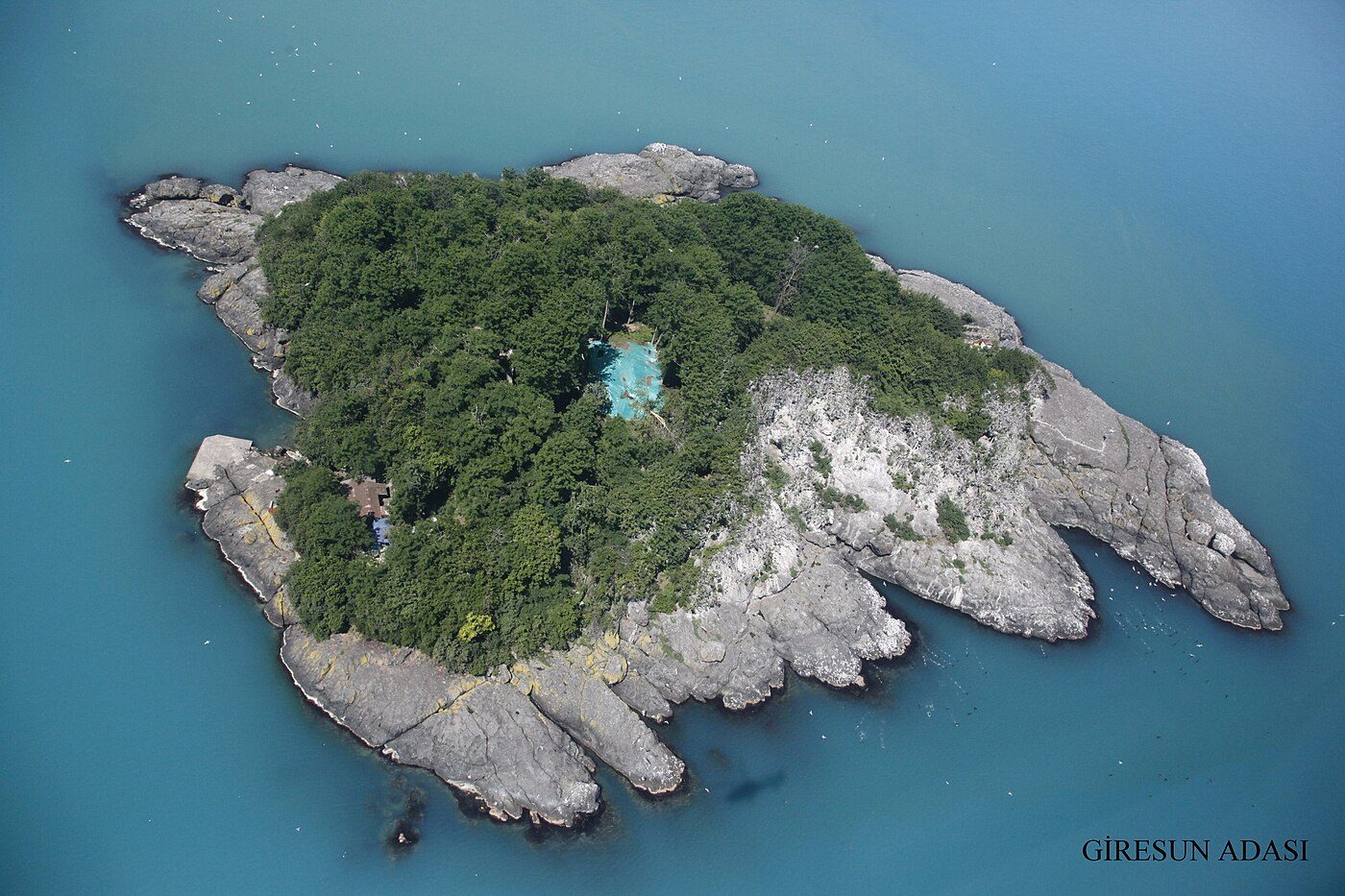
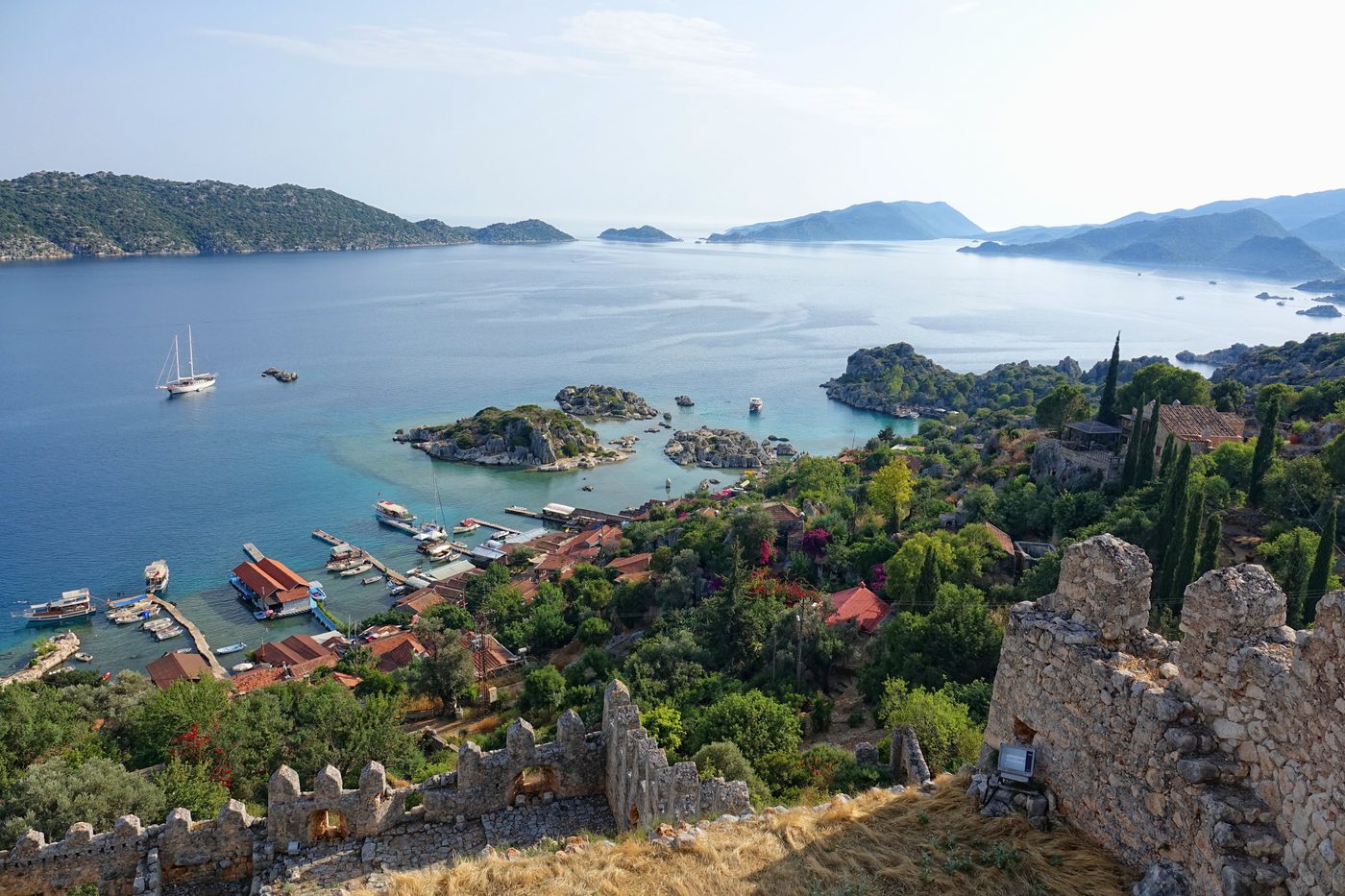
Visible from the city of Giresun lies the enigmatic Giresun Island (Greek: Aretias or Khalkeritis). In antiquity, this was a sacred site, described by the geographer Strabo and the epic poet Apollonius of Rhodes as a sanctuary used by the Amazons. They reported that it was dedicated to Ares, the god of war and the Amazons' divine father, and that the Amazons performed sacrifices and rituals there.
Archaeological surveys on the island have confirmed its long history as a cult center. While later Byzantine and medieval remains are prominent, traces of earlier activity persist. More compelling than any single find is the island’s enduring folk tradition. To this day, it is known locally as "Kızlar Adası" — the "Island of Women" or "Maiden's Island." This toponym is a powerful piece of cultural memory, an echo across two millennia that stubbornly preserves the island’s association with a community of women.
The island’s location is strategic. It sits as a sentinel in the Black Sea, a natural stopover and sanctuary. It is easy to imagine it as a ritual gathering place, not for a mythical all-female nation, but perhaps for women’s societies within the indigenous tribes. Such groups, involved in initiations, religious rites, or even martial training, could have formed the kernel of truth that grew into the legend of an Amazon sanctuary. The persistence of the name "Island of Women" is a testament to the deep imprint this concept left on the region’s identity.
Sinop: The Northern Bastion and the Trail of Artemis
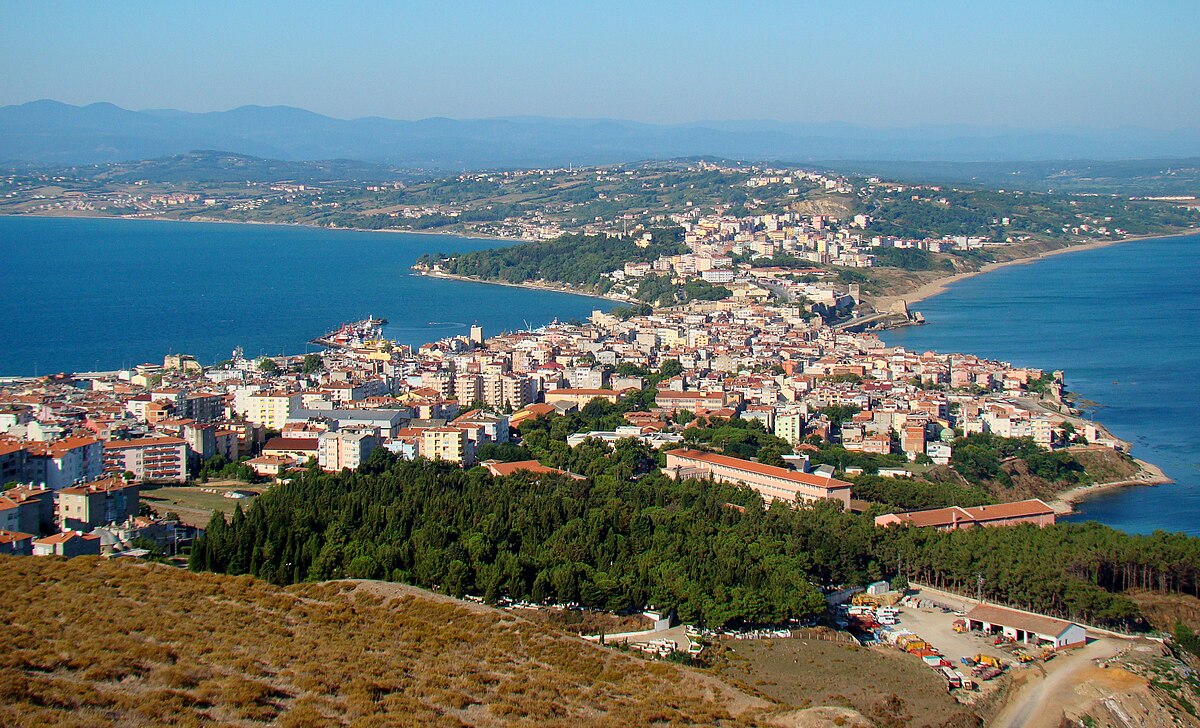
From Giresun, we follow the coast north to the dramatic peninsula of Sinop, one of the most important and impregnable ports of the southern Black Sea. Founded as a Greek colony from Miletus around 630 BCE, Sinop has layers of history. Its strategic position made it a gateway to the interior, where the Paphlagonian tribes held sway.
The Amazon connection here is twofold. First, Sinop lies within the territory the Greeks associated with the Amazons. Second, and more significantly, is the city’s strong cultic link to Artemis, the virgin goddess of the hunt, wilderness, and childbirth. Artemis was the Greek divine analogue to the Amazonian ideal — independent, fierce, and connected to the wild. Major temples to Artemis existed at Ephesus (itself linked to Amazon foundation myths) and in countless other cities.
In Sinop, Artemis was a principal deity. While the temple remains are fragmentary, numismatic evidence is eloquent. Coins minted in Sinop over centuries frequently feature Artemis, often depicted as a huntress with her bow. This iconography would have resonated powerfully in a region where the local populace, including its women, were known for their hunting and martial prowess. The worship of Artemis in Sinop can be seen as a Hellenized incorporation of a native Anatolian reverence for a powerful feminine principle associated with nature and the hunt — a reverence the Greeks encountered and translated into their own mythological framework, with the Amazons as its ultimate human expression.
Beyond the Myth: Reconstructing a Social Reality
So, who were the real "Amazons"? Archaeology allows us to move beyond the fantastical Greek narrative and propose a historically grounded hypothesis.
They were likely women of the steppe-influenced tribes of the Pontic region and Anatolian hinterland — groups like the Scythians, Sarmatians, Khalybes, and Paphlagonians. In these societies, social roles appear to have been more fluid than in the rigidly structured Greek world. Evidence from across the Eurasian steppe confirms that a subset of women participated in mounted warfare and hunting. Their burials, with weapons, horses, and sometimes injuries from combat, prove their status as warriors was real.
These societies were often egalitarian in death*, with wealth and grave goods indicating status rather than strictly gender-defined roles. The woman buried with the Scythian gorytos* in Amisos fits this pattern perfectly. She was a high-status individual whose identity was tied to the symbolic and practical power of the warrior-hunter.
The Greek colonists, arriving from a world where women were largely confined to the domestic sphere, witnessed these practices and interpreted them through their own cultural lens. The result was a mythic exaggeration: not just some women warriors, but an entire nation without men. The legend served multiple purposes: it defined the "otherness" of the barbarian world, explored anxieties about gender roles, and ultimately, celebrated the Greek heroes (Heracles, Theseus, Achilles) who could defeat such formidable foes.
Legacy
The warrior women of the Black Sea were not the single-breasted, man-hating nation of Greek drama. They were, however, a historical reality — women who held power, rode horses, drew bows, and commanded respect in the cultures of ancient Anatolia and the steppes. The archaeological trail from Terme to Sinop does not reveal a lost Amazon capital, but something more profound: the material footprint of a society whose gender norms were radically different from those of the classical world.
The Amisos Treasure gives us a face, albeit unseen, of this reality — a person of immense status for whom the bow was a symbol of identity. Giresun Island preserves the memory of their sacred space. The Thermodon region provides the geographical cradle for the story, and Sinop shows how their essence was absorbed into the worship of a major goddess.
The Amazon legend is thus a palimpsest. Scrape away the Greek heroic fantasy, and you find the indelible imprint of real Anatolian women. Their story is not one of isolated myth, but a testament to the diversity of human social organization. In the end, the legacy of the Amazons is not merely in the tales told about them, but in the enduring power of the idea they represent: that the pages of history, and the soil of archaeology, have always had room for the woman warrior. Atlas Anatolia invites you to look at this landscape anew, where every gust from the Pontic coast seems to whisper that the legend was here, rooted in the very earth, waiting to be unearthed.